As winter loosens its grip on the University of Rhode Island’s campus, students are buzzing with anticipation for warmer days ahead. But there is one buzz that isn’t waiting for summer to arrive: the Bee Lab.
Located on East Farm, less than a mile from campus, the lab researches ways to save pollinators and help regrow their diminishing populations in Rhode Island, according to Steven Alm, professor of plant sciences and entomology at URI. For about a decade, he has conducted research with graduate students at the Bee Lab.
“We found that [Rhode Island] used to have 12 species of bumblebees,” Alm said. “We were only able to find seven of them.”
Bees are vital to our food production, and with their numbers dropping, tracking their populations is more important than ever, according to Alm.
“Unfortunately there’s been quite a drop, and it’s due to a lot of different reasons,” Alm said. “But one thing people could do is plant more native plants for our native insects.”
The lab has been working to find new ways to attract pollinators, according to Alm. This season, they are preparing for a study on using scent lures and colors to encourage the more than 280 native bee species to the farm.
Steven Seapolski, who received his master’s degree from URI in 2019, conducted a study on a different flying insect and found Japanese beetle traps also attracted bumblebees and carpenter bees. That led Seapolski to start making bee-friendly traps, using their favorite colors and scents, which allowed the lab to track the native bee populations easier.
These traps came in a variety of colors along with a floral scent lure, so it didn’t come as a surprise to see bees were attracted to the yellow traps, as yellow is one of bees’ favorite colors, according to Alm.
Three people lead the Bee Lab’s team, including Alm, Casey Johnson, a research associate and Emma Tondre, a research assistant. Once summer arrives, the team expands an additional five people, including research fellows and URI College of Environmental and Life Sciences students, according to URI’s website.
The research team is currently involved in three projects, two of which are observing bee behavior, and one is observing a parasitic mite that infests honey bee colonies, according to URI’s website.
For one of the projects, the Bee Lab is partnering with the Connecticut Agricultural Experiment Station, a state-supported agency conducting scientific research on plants, insects and environmental science, aiming to monitor native bees’ reaction to Farm Bill conservation planting in Rhode Island and Connecticut and to evaluate the efficiency of existing Farm Bill practices.
The Farm Bill is a five-year federal legislative program that governs agricultural, food and conservation policies, according to Rep. Chellie Pingree of Maine.
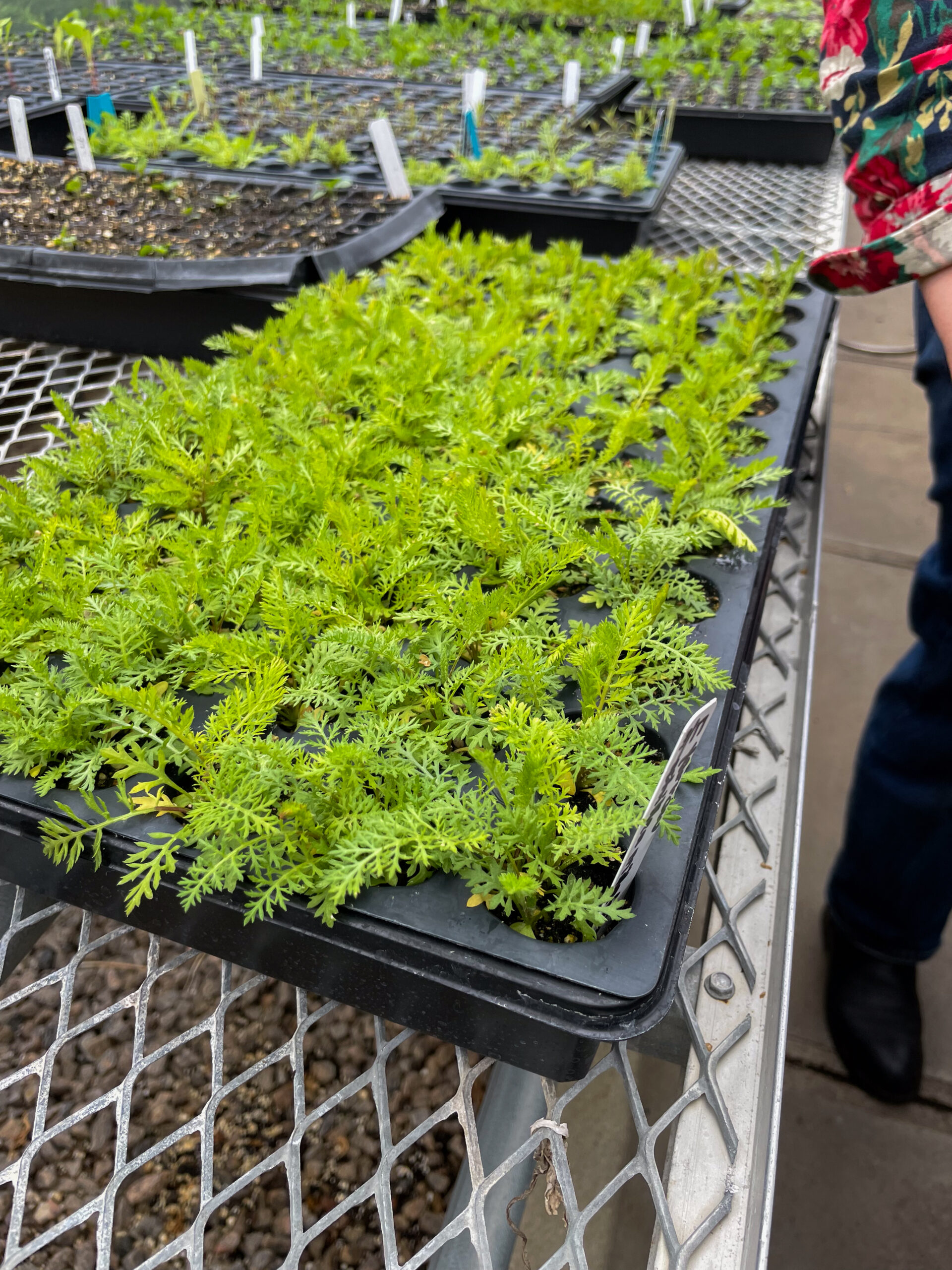
Alm encourages people to get involved by planting whatever native plants they can. Early, middle and late season flowers help bee populations to grow, according to Alm.
“It doesn’t matter if you just have just a deck with some potted plants,” Alm said. “They’ll find it. Don’t feel you’re not contributing if you can only do a small area because every little bit helps.”
For Alm and his team at the Bee Lab, every flower planted is a step toward ensuring Rhode Island’s native bees have a fighting chance.