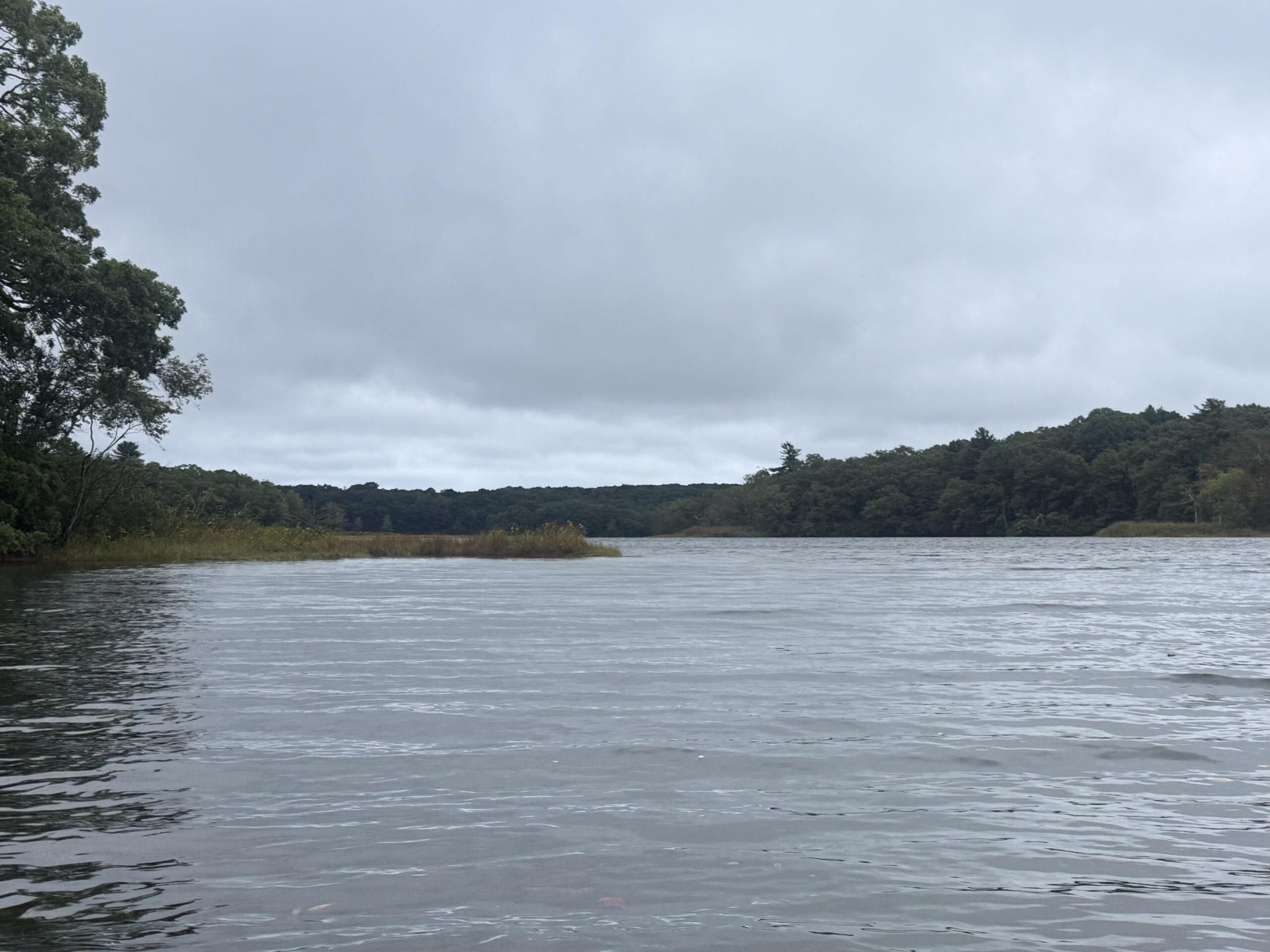
URI professor Ying Zhang received a $4 million National Science Foundation grant to further her research on coastal wetland restoration in collaboration with Louisiana State University.
Zhang, who works in the cell and molecular biology department, said that her team’s research focuses on the mechanism, benefits and outcomes of wetland restoration.
“Our hope is that through this grant, we’re going to build some baseline knowledge and maybe build infrastructure so that we could help inform coastal wetland restoration,” Zhang said. “We’re learning from practitioners in the field to try to see where the gaps are in their knowledge.”
The research groups from Rhode Island and Louisiana have known each other since 2019, but Zhang said they started the NSF grant application about two years ago.
“We’ve met in conferences and we have always wanted to work together,” Zhang said.
The communication and collaboration between URI and LSU is supported by interjurisdictional meetings, which Jackie Witterschein oversees as community engagement lead for Rhode Island.
“We’re gathering stakeholders in each area to talk about the research, to help feed the researchers information that they need about how to design the research and then also on the back end to help evaluate and assess how well we did,” Witterschein said. “Community members really need to know a baseline of what we’re doing with our research.”
Over the course of the project, Witterschein said the team plans to create a web portal that will be accessible to each jurisdiction’s community advisory board. The portal will integrate the community into the project’s feedback.
In terms of research methods, Zhang’s team will look at molecular biomonitoring, AI-enhanced modeling and wetland valuation.
“We want to use the latest molecular technology to tell us what are the diversity of species,” Zhang said. “Are there indicator species that can tell us maybe those are stressful conditions for this ecosystem?”
Zhang said that the AI-enhanced modeling will help the team to assemble and synthesize their data in a more efficient manner.
Hui Zhou, an assistant professor of environmental and natural resource economics, is working on the valuation and financing strategies component of the project.
“To make those investments, we really need to understand the cost and benefits of those investments,” Zhou said.
Zhou’s research tasks include converting results into useful information for policymakers and encouraging private landowners to protect wetlands on their property.
“A lot of wetlands are actually located on private lands, and we really want to encourage those landowners to restore the wetlands and to protect those wetlands, but they need incentives,” Zhou said.
Zhou said that protecting and restoring wetlands is important because of the ecosystem services they provide, such as mitigating flood damages. The team’s research is important because of how historically understudied wetlands are.
“We don’t want to risk losing them,” Zhang said.
Although the project is still in its early stages, Zhang said that the Rhode Island research locations will likely include the Narragansett Bay National Estuarine Research Reserve on Prudence Island, along with sites in Quonochontaug and Succotash.
Zhang said that the future success of this project will be because of the team’s ability to work together.
“Everyone in the team has devoted their time to making this happen, so I’m so excited to just continue that momentum,” Zhang said.