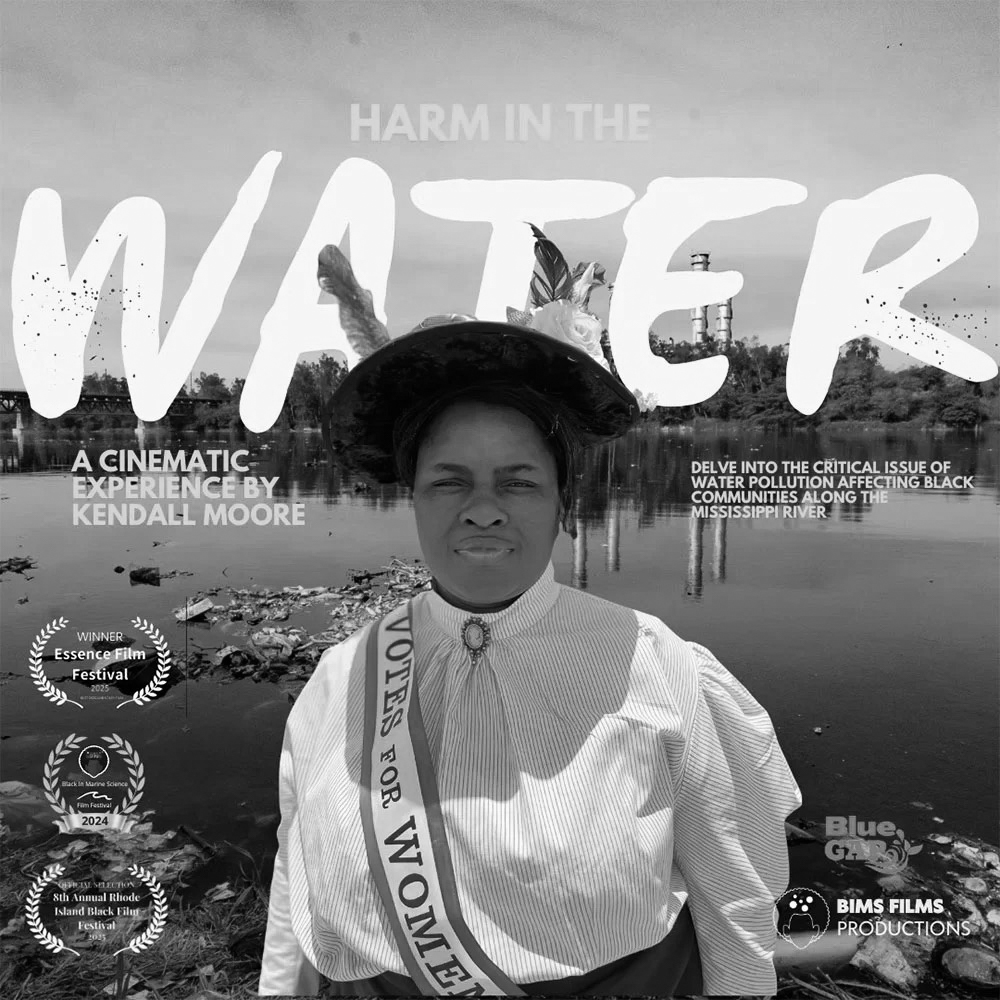
Kendall Moore’s film “Harm in the Water” won the best documentary award, chronicling the effects of chemical pollution in black communities.
Directed by Moore, a University of Rhode Island professor of journalism, the film “Harm in the Water” travels along the Mississippi River, documenting the effects of chemical pollution within Black communities, according to a Sept. 26 release by EINPresswire. In July, the film won the Essence Film Festival’s best documentary award. Production was additionally supported by executive producer Tiara Moore, founder of the non-profit organization Black in Marine Science and National Science Foundation-sponsored project, BlueGap.
Cumulatively, 10 festivals featured screenings of the film, with several recognizing it as a nominee or finalist, according to Moore. Recognition included the Awareness Festival’s Merit Award and official selection by Rhode Island Black Film Festival.
Moore and the production team traveled from Missouri to Louisiana, interviewing community members affected by “Cancer Alley” – a corridor along the Mississippi River that takes its regional nickname from high cancer incidence, according to a report by Human Rights Watch. Affected communities in the 85-mile stretch live close to fossil fuel and petrochemical plants. “Cancer Alley” contains the largest concentration of these plants in the Western Hemisphere. At least a dozen of the plants located in “Cancer Alley” reported release of toxic pollution in amounts that exceed federal limits established to protect public health.
While activists across the region have pushed for increased enforcement of environmental regulations, citizens and independent environmental organizations have found responses thus far to be insufficient, according to Human Rights Watch.
Residents in St John – a predominantly black Louisiana town located within “Cancer Alley”– are exposed to a cancer risk more than seven times the national average, according to environmental protection agency data interpreted by NBC in 2023. Denka petrochemical plant, previously located 450 feet from the town’s Fifth Ward Elementary school, is one plant out of approximately 200 operating within “Cancer Alley.”
EPA testing conducted in 2022 nearby the plant recorded air pollution 8,300% excess the recommended long-term exposure level. In 2025, St John’s Fifth Ward Elementary school closed, citing concerns of inadequate regulation from community members. The petrochemical plant, owned by Denka Performance Elastomers, remained operational.
“It is difficult investigating what is – and this is [the community’s] words – genocide,” Moore said.
The film had been in production for two years, according to Moore. Its function is to give community members an outlet to share their stories.
“My philosophy as a filmmaker, a documentary filmmaker, is to let the story tell itself,” Moore said. “I shape the story around what the communities and individuals have told me and what the message is that they want to convey to a broader population.”
Although the work of documenting undue hardship is difficult, it’s important to look for people doing work to help as well, according to Moore. She shared that while accolades are appreciated, they weren’t the goal. The team expressed gratitude for the widespread recognition of the film and appreciates that recognition, like from the Essence Film Festival, will draw attention to the issues documented.
“It really is up to the people who inhabit this issue,” Moore said. “This is their lived experience.”
URI students can expect a screening on campus in the coming months, although an official date has not been confirmed, according to Moore. Upcoming screenings nationwide include the Annual Baltimore International Black Film Festival, in Baltimore, Maryland, the Gary International Black Film Festival, in Gary, Indiana and the Jackson Doc Fest in Jackson, Tennessee.