
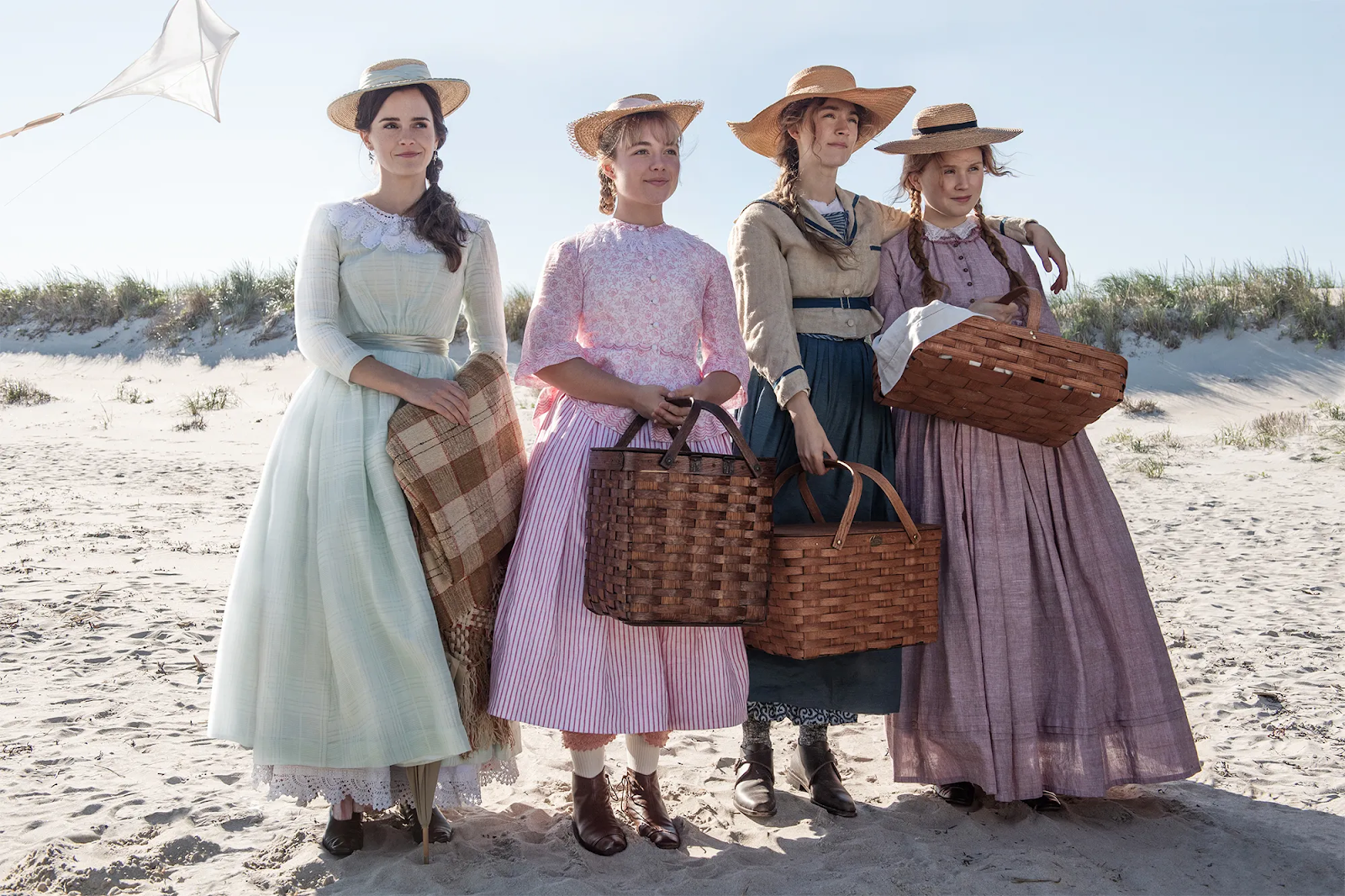
Greta Gerwig’s 2019 film, “Little Women,” is as timeless as the book it is based on.
Adapted from the classic “Little Women” by Louisa May Alcott, Gerwig’s film brings the novel to life while reaching a modern audience. From the vibrant cinematography to the chemistry between the actors, the movie is an emotionally captivating experience.
Gerwig’s adaptation involves several time jumps differentiated by their lighting and character styles. The timeline fluctuates between the childhood and adult lives of the four March sisters: Amy, Beth, Jo and Meg, during and after the Civil War.
The biggest part of what makes this film special is the portrayal of each character. The March sisters and their journeys are relatable for many girls, especially those with sisters.
Each March girl pursued a different passion despite being limited by the gender norms of her time. Amy is a painter, while Meg enjoys theater. Beth is a pianist, and Jo, the main character – played by Saoirse Ronan – is a writer.
Jo’s character is an allegory for Louisa May Alcott’s life as a writer who decided never to marry in a time when a woman’s value was entirely tied to her husband. However, Jo ends up with a man at the end of the story. A man who, I hate to say, is so forgettable that I can’t even remember his name, but that’s the point.
Theodore Laurence, “Laurie” to the girls, is the grandson of the March’s wealthy neighbor, Mr. Laurence. Laurie – played by Timothée Chalamet – and Jo have a special bond early on. This relationship grows into something more for Laurie, who confesses his feelings to Jo in an iconic and beautifully directed scene.
“I’ve loved you ever since I’ve known you, Jo,” Lauri said tearfully in the scene, while Jo begged him not to, anticipating his words.
Ultimately, Jo rejected her best friend. And Laurie, unable to handle the heartbreak, escaped to Europe.
After experiencing grief and loneliness, Jo questioned whether she should have rejected Laurie. Months later, she desperately tried to take back her rejection, but by then, it was too late.
At the end of the film, Jo spontaneously chose to find love with the man she met while living in New York City.
Gerwig’s ending, much like the novel, is up for interpretation. It raises questions like, “Do we need love in order to be fulfilled?” and “Does Jo’s last-minute change of heart stem from her feelings of loneliness, or is it a genuine connection?”
Maybe most importantly, audiences wonder: “Do we still live in a time where the heroine has to end up with a man in the end?”
Amy is the youngest March sister, played by Florence Pugh. Her character is meant to be Jo’s opposite. Constantly arguing with each other, the sisters’ petty drama threatened to consume their relationship at times. Amy starts as a vain brat but eventually develops into a goal-oriented woman.
Amy’s iconic line, “I want to be great or nothing,” describes her character’s will.
Traveling in Europe with her wealthy Aunt March, played by Meryl Streep, Amy discovers her passion for painting. Yet she is burdened with the responsibility of securing wealth for her family, where her sisters failed.
The combination of her sense of duty and relationship with Jo leads her to Laurie, who she runs into in Europe. The two end up marrying and Amy secures his wealth for the rest of her family.
I love Gerwig’s interpretation because she understands Amy’s character development, moving beyond being a young, selfish girl.
Meg, the oldest – played byEmma Watson – decided to marry and start a family instead of pursuing theater.
“Just because my dreams are different than yours, it doesn’t mean they’re unimportant,” she said to Jo in a scene.
Beth is the sweet, optimistic sister, representing the character we should all try to be. But devastatingly, she passed away from illness. Amy puts it perfectly, sobbing when she finds out in Europe: “Beth was the best of us.”
Like the original novel, “Little Women” is special because each sister is unique and pursues her dreams with passion. And despite constant bickering, their relationships grow strong through the film.
If you find yourself with a little over two hours to spare, I highly recommend watching “Little Women.” Just be prepared with a box of tissues and a pillow to scream into.