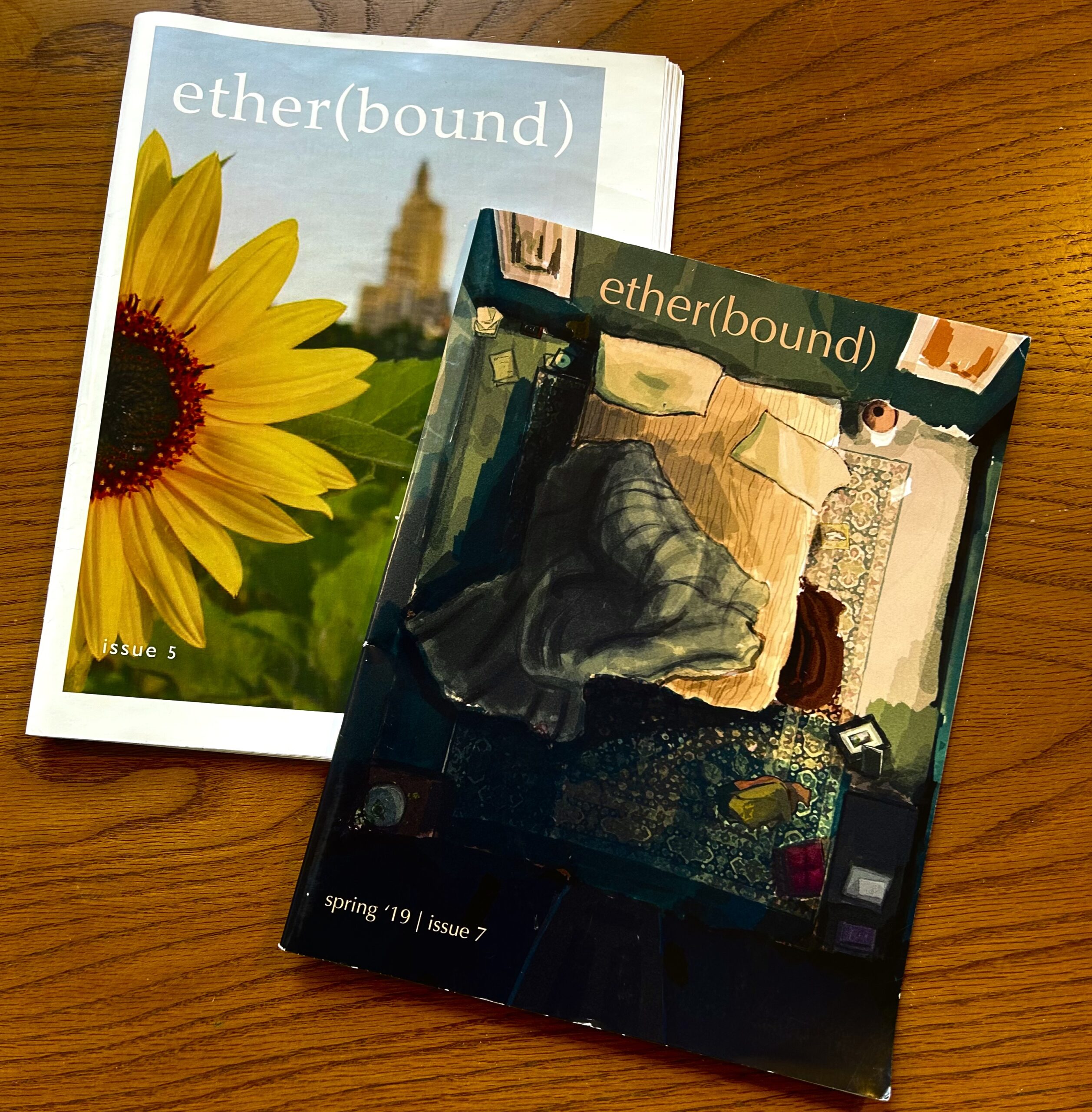
After four years of online-only publications, Etherbound Magazine, a student-led magazine, is working to bring back physical copies for the University of Rhode Island community.
Etherbound Magazine is a literary magazine where students can publish literature and art, according to Julia Caldeira, a third-year student at URI and visual art editor for the magazine.
Any type of visual art or media is acceptable, according to Caldeira. For art, students can submit pictures of a sculpture or photos of drawings or paintings. For literature, students can send poems, fiction and nonfiction short stories and essays.
Students are allowed to submit to multiple categories, according to Caldeira. If students have more than one piece they want to send, they would need to make separate submissions for each genre. For each genre, students are permitted to submit only one piece of fiction or nonfiction, five pieces of visual art and three pieces of poetry. The submissions could come from class assignments or made outside of school as long as it’s their own work.
Chloe Ripa, a second-year student at URI and the editor of creative nonfiction and essays, said there are benefits to being part of a group.
A lot of the time, students are focused on STEM subjects, while humanities is the base for everything, according to Ripa. If a student writes a scientific paper, they need to know the language behind it.
The team suggests that students stay away from using artificial intelligence, according to Ripa. AI removes the joy of creativity from making art. If a student is making art through a prompt given by a robot, it takes away the fun of writing or producing visual media.
“It’s so much better to do things yourself than have a robot do it for you,” Ripa said.
Etherbound Magazine started in 2016, printing both physical and digital editions, according to Caldeira. However, in 2019, the editors had to switch to only online publishing because of COVID-19. The last physical edition was their 12th issue, so they want to bring physical editions back.
Etherbound’s mission is to build a community within the URI student body where they are encouraged to express themselves, according to Caldeira. By publishing work, students can connect with each other through art. Their art is valued through its product, not about how good it is or not.
“We want to cultivate an environment where you’re encouraged to [take a] break from the world and explore what it looks like when you make things for yourself and share them with others,” Caldeira said.
The creative process includes constructing an ethos and discussing the theme and message of Etherbound, according to Caldeira. The team is currently accepting submissions for students considering sharing their art. Depending on the type and amount of work they receive, the team reviews each piece and develops the theme for each issue.
“We just kind of try to think of, like, how can we make [the magazine] fresh?” Ripa said.
The team is also working to revamp the look of the magazine, according to Ripa. They made a new logo and changed the spelling of the title. The team emphasizes the importance of physical copies through its new style.
The upcoming edition is set to release in March 2026, according to Caldeira. Copies will be distributed both physically and online.
If students want to publish work in Etherbound Magazine, flyers are posted all over campus or on etherboundmag.com, according to Caldeira. The flyers direct students to a Google form through a QR code to submit pieces.