I was introduced to the Victoria’s Secret Angels before I could even form memories. The story, according to my mother, goes, we saw a billboard on the side of the road, advertising the lingerie brand.
“Mommy,” I said in fear, looking up at the towering tanned women above me. “I don’t want to be one of those girls.”
My feelings about that would change drastically over the next 15 years. Victoria’s Secret, a brand with a history marred by ties to disgraced financier Jeffrey Epstein, has been embedded into every major turn in my life as a young woman.
All my life, the Victoria’s Secret Angels have been looking over my shoulder. I spent a lot of time in shopping malls growing up, since my parents were divorced and my father couldn’t come up with any other activities for a little girl. Every time I passed the lingerie store, I snuck a glance at what was inside the dark interior, catching glimpses of the smoulders the models made back at me.
That, I learned, was what it was to be desired. The Angels were propped up by the world as the epitome of female beauty, the object of every man’s attraction and every woman’s envy. Their gleaming white grins and toned abs strutting down a runway were what every woman should want.
When I was 15-years-old, I became obsessed with the Angels and modeling in general. Every night I scoured the internet for videos of what they ate, how they worked out and how they spent their time. I saved photos of Gigi Hadid and Barbara Sprouse on my phone, determined to follow their example as closely as possible and finally become desirable. Lovable.
In reality, I was suffering from severe anorexia, putting almost certainly underweight women on a pedestal to model (ha) myself after.
The Victoria’s Secret Fashion Show went dark in 2018 after a viewership decline and a culture shift had caused the public to sour on the brand at the height of the #MeToo movement. Coincidentally, the show returned the same year President Donald Trump was elected.
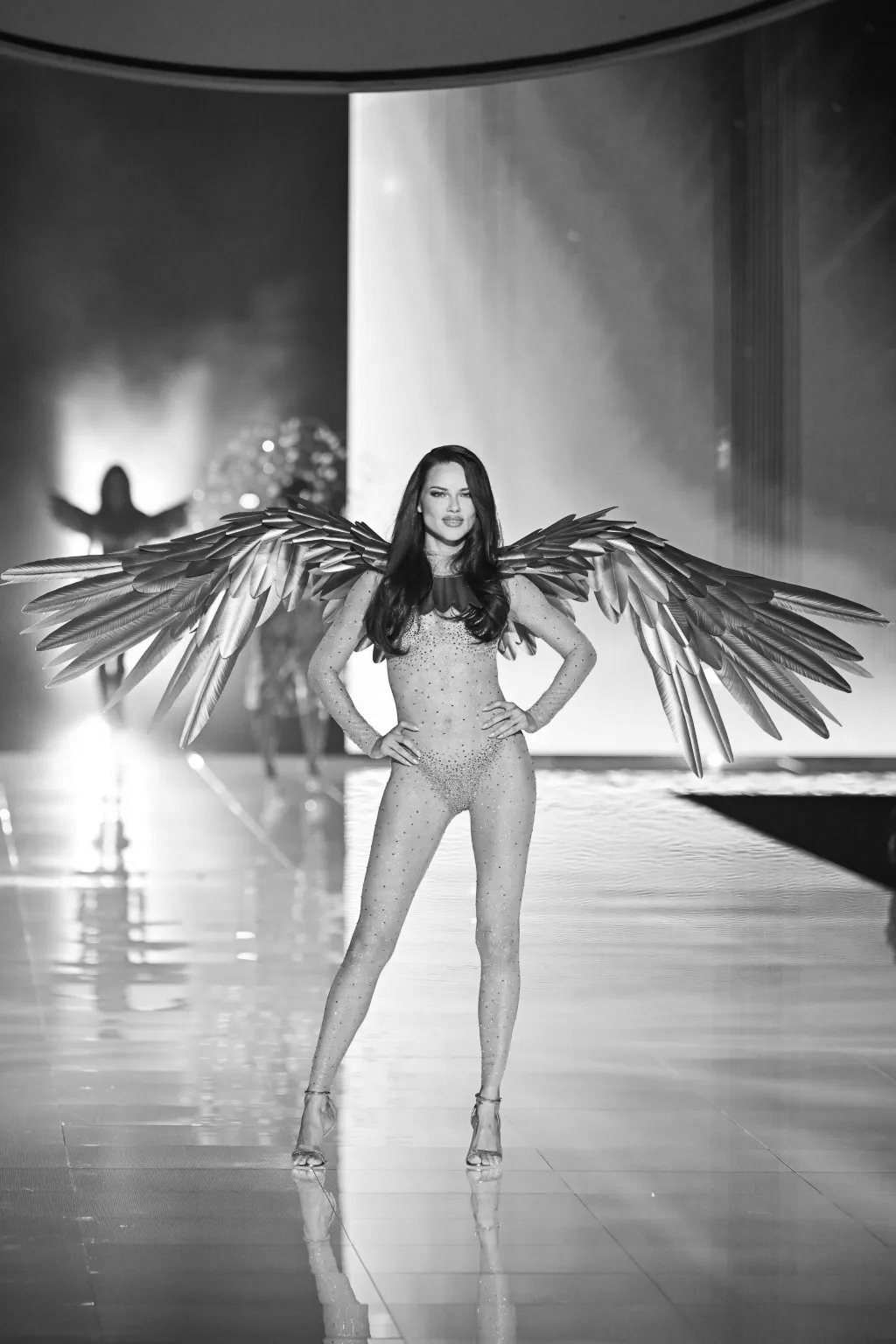
Last year, I watched clips of the same models from a decade prior stomping down the runway in glittering lingerie, their shoulders carrying 50-pound angel wings. Commenters hated the new slicked-back hair and simple set which was the brand’s clear attempt at moving into the new decade.
This year, the audience knew what they wanted. On Instagram, videos were made begging the brand to bring back the iconic bouncy blowouts and more of the iconic Angels. The 2025 show fell somewhat short compared to its predecessors, but it was an improvement in the eyes of the public.
The same models that walked the glittered runway for the brand 10 years ago returned, cheeks plumped with filler and foreheads seemingly cemented with Botox. A crowd previously filled to the brim with A-listers was now a who’s who of influencers, abandoned by the high-profile stars. The patterns and costumes of the 2010s were gone, replaced with sleek, rhinestoned outfits.
The 2025 Victoria’s Secret Fashion Show felt like a hollow recreation of something we, as a culture, had left behind.
What’s worse is how I’ve seen women react on social media. I’ve been bombarded with Instagram reels of women in the gym with captions referencing the Angels as “thinspo.” Women around the world made videos watching the show, calling it “the girls’ Super Bowl.”
Is this really what brings women together? Rampant consumerism and an exclusive beauty ideal?
Victoria’s Secret sells the pink and white striped satin robes the Angels wear backstage for a reason. So we can pay to pretend we’re a part of the bubble they’ve created, finally deemed desirable by the capitalistic powers that be.
At 19-years-old, I made my first purchase from the notorious brand, a rare instance in my quest to avoid fast fashion. Walking out of the store with my pink striped shopping bag, I felt different, like I had finally gone through some rite of passage. I felt like a woman.
But as I watch a new generation of girls become exposed to the same messages I was, despite the brand’s hollow attempts at inclusivity, it’s hard to support the show’s return. Some things are better left as a relic of the past.