
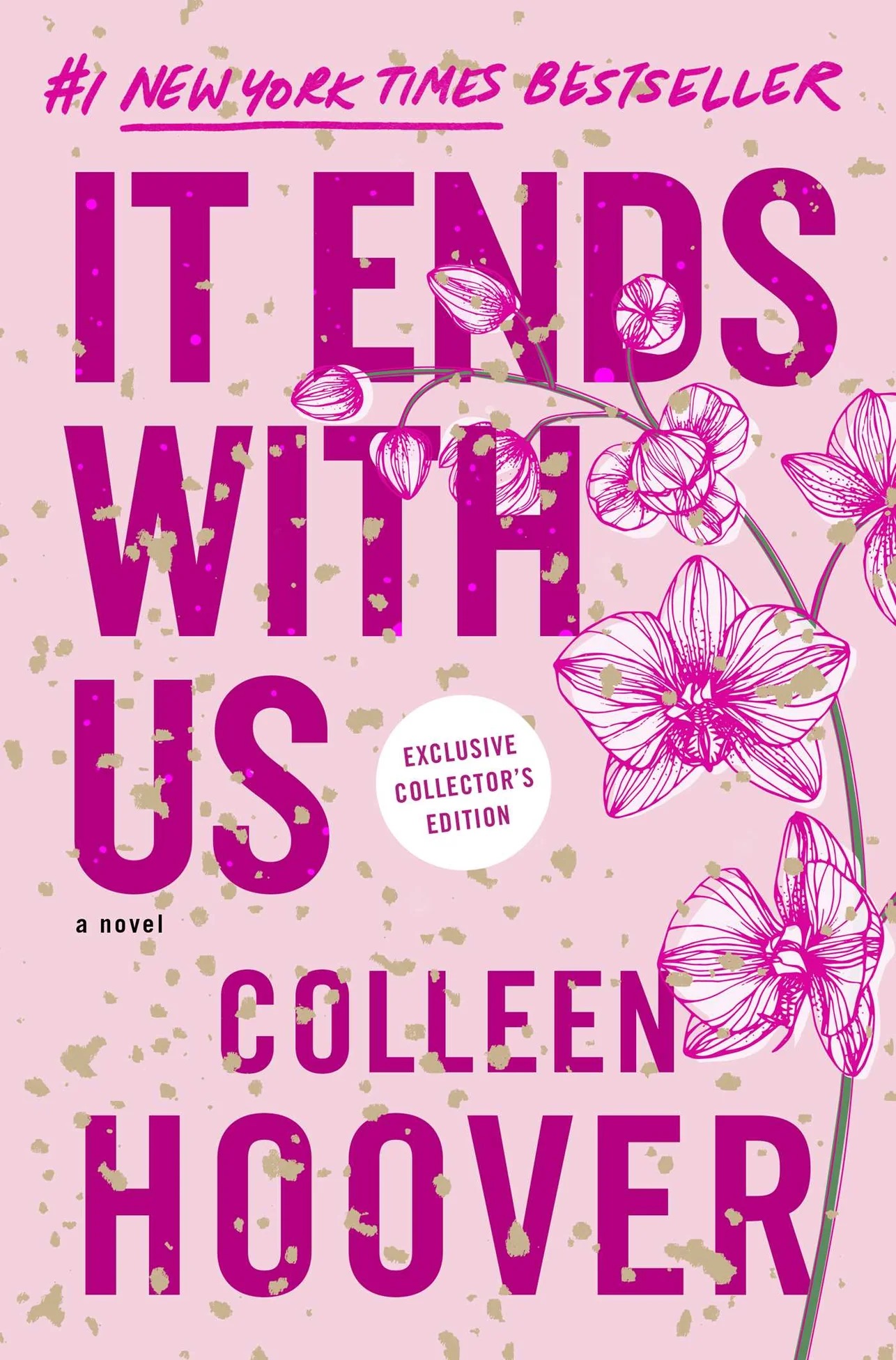
“It Ends with Us” is a fan-favorite book written by Colleen Hoover and was adapted into a movie released in 2024.
The story offers a deep insight into how domestic violence can shape a family and a young woman’s future. It follows Lily Bloom through her journey of love, trauma and the fight to break the generational cycle of abuse.
After her father’s funeral, Lily moved from Maine to Boston to start fresh and pursue her dream of opening a flower shop. There, she meets Ryle Kincaid, an ambitious neurosurgeon. Their relationship quickly grows into a passionate romance, but Ryle’s temper and controlling behavior soon mirror the violence Lily witnessed as a child.
In the midst of Ryle’s abuse, Lily reconnects with her first love, Atlas Corrigan, a once-homeless boy she secretly helped as a teenager. Their reunion at his restaurant, Bibs, forces Lily to confront the truth about her relationship after Atlas notices the state Lily is in.
In the movie, however, Atlass’ restaurant is renamed “Root.” The change is likely to signify Lily’s love for flowers and her character growth. Although a small change, “Bibs” is the name Lily and Atlas imagined in the book.
One of the story’s most powerful moments is delivered by Ryle’s sister, Allysa.
“As his sister, I wish more than anything you could forgive him, but as your best friend, Lily, if you take him back I will never speak to you again,” Alyssa said.
It captures the power of family love, and the importance of safety and reassurance.
While the movie stayed true to the general storyline, there were several differences that set them apart.
One of the first is the characters’ ages. In the novel, Lily is in her early 20s and Ryle is in his early 40s, while in the film, Lily is aged up to her 30s. The difference added a more mature perspective on the events that occur.
The opening scene differs as well. The movie begins with Lily at her childhood home preparing for her Father’s funeral. Meanwhile the book opens with Lily sitting on a rooftop, the same rooftop where she meets Ryle for the first time and they share their “naked truths.” In the novel, Lily reveals her parents’ abusive relationship at this time. The film reveals the trauma during their relationship.
In the book, while on the rooftop, Ryle takes a picture of Lily and turns it into a portrait in his apartment later on. This becomes an early sign of his obsession, but this subplot was omitted from the film.
Another noticeable change is the omission of Lily’s journal entries addressed to Ellen DeGeneres. In the book, Lily writes letters to her as a coping mechanism and a way to process her childhood trauma. It is also used as a bonding moment for her and Atlas as they watch her show together. The movie removes this element entirely, simplifying Lily’s inner thoughts.
The depiction of domestic violence also changes. While the book portrays the abuse with raw, explicit detail, the movie softens certain scenes to fit a PG-13 rating. This change frames some moments as misunderstandings rather than direct violence.
Specifically, the magnet-versus-tattoo scene represents these changes. In the book, Ryle discovers a connection between Lily and Atlas through a magnet that says, “Boston – Where everything is better.” He later finds Lily’s journals from that time and uses them against her. During the confrontation, he uses the magnet as a weapon while he sexually assaults her. In the film, the focus shifts to Lily’s tattoo instead. When Ryle realizes her open heart-shaped tattoo represents a carving Atlas made when they were kids, he becomes violent and bites the spot where the tattoo is, mirroring the book’s brutality in a less graphic way.
Another pivotal moment that was altered during the movie was Lily finally turning to Atlas for support. In the book, Lily called Atlas after being attacked by Ryle and he came to get her. In the movie, Lily ends up at Atlas’s restaurant after Ryle pinned her down on the couch. Atlas immediately takes Lily to the hospital without leaving her side.
Despite the changes, the film still delivers the most vital message that breaking the cycle of abuse takes strength, courage and a love that prioritizes healing.