
The political science and history departments opened a free pop-up bookstore in the Memorial Union to clear excess books from Washburn Hall and provide them for the University of Rhode Island community to read.
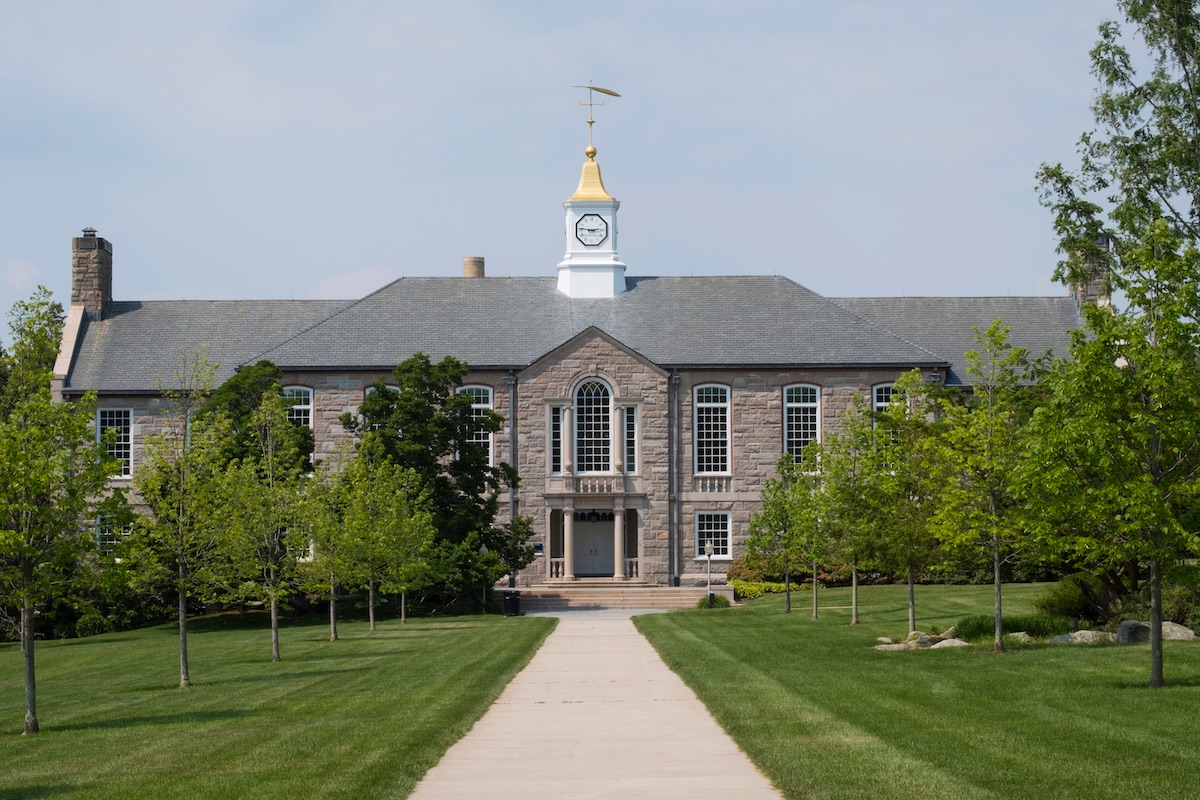
The departments came up with the idea for a pop-up bookstore for URI community members to use when they discovered a structural issue within Washburn Hall, according to Ping Xu, the chair of the political science department. Faculty members had to move their books to the basement so the issue could be fixed. As a result, members realized they no longer needed them and it would be good to let someone else enjoy the books and benefit from the content instead of having them sitting alone on a bookshelf for an extended period of time.
In the process of creating the book pop-up, the faculty decided to choose books from their personal libraries that they had extra copies of or were out-of-date, according to Robert Widell, chair of the history department. The departments thought that if there were people who could use these books, such as students or community members, they should give access and make them available for their benefit. Instead of them being thrown out of being recycled, they were being put to good use.
The URI community should learn about political history to be actively engaged citizens, according to Widell. Studying history or politics is not just learning about the past; it is about what you have learned relating to human relationships, political structures, economic relationships, along with race and gender and sexuality, Widell said. Reading books is a vehicle for thinking about human conditions and change over time, then relating it to present day.
“I think the real work of history is when you take that [knowledge] and apply it to thinking about the world around you,” Widell said. “That includes politics here, right? So, you know, the way to understand our current political moments is [learning] about the structure of the American government and the data from the current moment that folks like sociologists and political scientists and so on can provide.”
Political history also explains why humans behave the way they do, according to Widell. Historians take into account the often contradictory and inexplicable ways people think and act. People think critically about the world, and politics is the process of using power, influence and institutions to shape or change it.
The book pop-up consists of various topics, including history from Europe, Latin America, Asia and the United States, according to Widell. There are works that talk about the environmental movement and activism, civil rights and struggles with race and religion. Other books look at war and issues around fascism.
“That’s sort of what a number of us, or most in the department, were wide [and] diverse in terms of our interest,” Widell said. “It’s reflected in the books that we have.”
The main genre of the books is nonfiction, according to Xu. There is a variety, including coursebooks, scholarly writing and story collections related to history. However, there is also realistic fiction, based on historical events and politics.
The pop-up gets restocked as shelves empty, according to Widell. Depending on how empty the shelves are, more books are brought in waves to replace the ones taken by people.
“In the end, it’s about environmental sustainability,” Xu said. “We’re making a second use of the books and a faculty-student connection.”
The free book pop-up store is located in room 116 in the Memorial Union and will be open until Wednesday at 10 p.m. when it closes for good.