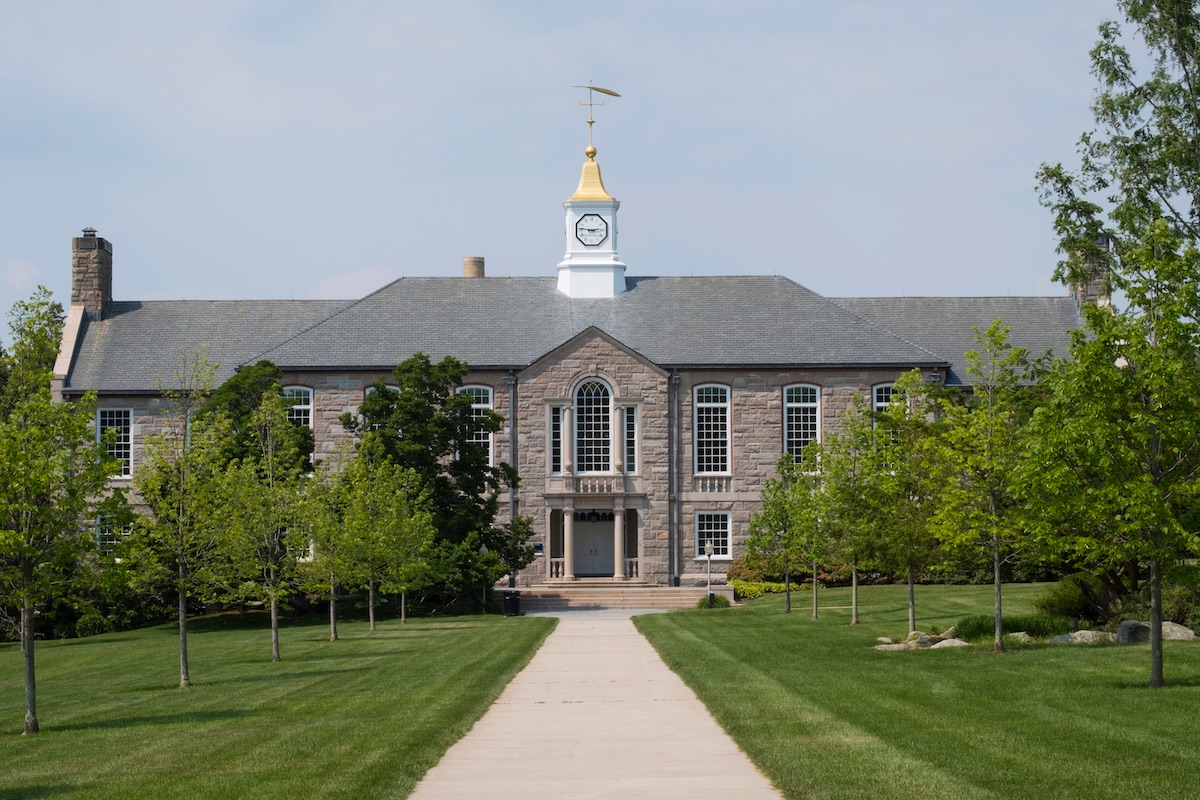

As the winter season approaches, the University of Rhode Island is taking action to ensure the safety of students with mobility disabilities on campus.
The university is required to make all pathways accessible following any adverse weather conditions, Dorca P. Smalley, director at the Office of Equal Opportunity, said.
“Every town has different laws that require the university to act following the cessation of snow,” Smalley said. “What may be reasonable under the law may not be what other people may prefer. So in that sense, we encourage students to exercise caution.”
WPRI Chief Meteorologist Tony Petrarca forecasts that this winter season, more snowfall is to be expected than the past three winters. The winter outlook forecasts a “much colder” December, with temperatures well below average.
URI hires external vendors to clear the walkways each morning to remove any potential hazardous conditions, according to Smalley.
“In addition to hiring those vendors, every building has assigned custodial staff,” Smalley said. “Some start arriving as early as four in the morning, and they begin the process of clearing those pathways.”
Smalley said that throughout the day, walkways and paths could become obstructed.
“Throughout the day, things can continue to melt and may become icy, and that’s why it’s important that anyone with concerns reports the areas to the facilities group,” Smalley said.
Students are encouraged to report any obstructions to the Facilities Group by completing a work order form.
“ Under the ADA, every even complaint is judged from a reasonable person’s perspective,” Smalley said. “If it is unsafe, use caution. If unsure, talk to your faculty, [and if] you are a student employee who’s supervised by a university employee, talk to your supervisor in the employment context.
For campus transportation, Paige Ramsdell, assistant dean of students, accessibility and inclusion, encourages students with mobility disabilities to use the “point to point” transportation system called Rhody Rides.
The URI Disability Service website notes, “Rhody Rides is intended to support students with documented, permanent disabilities, as defined by the Americans with Disabilities Act, by providing supplemental transportation support on the URI Kingston Campus.”
Ramsdell said that the transportation service does offer flexibility beyond the scheduled pick-up times.
“ There’s a Rhody Rides phone number if students get [out of] class early or especially at final time, because final exams, scheduling is a little different,” Ramsdell said. “Students do have the ability to call [Rhody Rides driver] Walter if he’s not driving right or if he’s been between rides.”
Third-year student Maya Wolski uses the Rhody Rides services as a form of transportation around the URI campus. Wolski complimented the service but did point out its flaws.
“[Rhody Rides] only starts at 8:30 [a.m.], and I have 8 a.m. classes, so that isn’t great,” Wolski said. “But everything after 8:30 a.m. has been really easy and straightforward to get set up and to use and to get to class, and it’s never failed me.”
The URI community can contribute by helping to keep walkways clear, according to Wolski.
“I mean, even for non-disability things, keeping sidewalks clear helps everybody, and I think community effort is the best way to have improvements,” Wolski said. “So if everyone works together and keeps the place clean, it’s better for everybody, not just disabled students.”
Wolski has said her experience on campus with mobility accessibility has been, “generally, really good, and [with] only a couple of isolated incidents.”
Not all students who identify with a disability have the same shared experience at URI, according to Wolski. Annette Bourbonniere, a former URI graduate student and co-founder of the Disability Advocacy Group, said she had mobility trouble during the winter season on campus.
“I needed to go to Health Services to get some cough drops; I had to find [a] path that’s not blocked by snow, and then I got there and they had shoveled the steps to Health Services,” Bourbonniere said. “But not the other part of it where you could go in with a wheelchair. I had to call the pharmacy and wait across the street, and they had to come out and bring [my] prescription.”
Ramsdell stressed the importance of alerting the DAI office if students have concerns regarding mobility accessibility on campus.
“ We can’t act on information that we’re not aware of,” Ramsdell said. “ So that’s the critical piece is really coming in and connecting with us and letting us know when there are issues.”
For questions or concerns about mobility disability safety on campus this winter, visit the Office of Equal Opportunity’s ADA Compliance page.