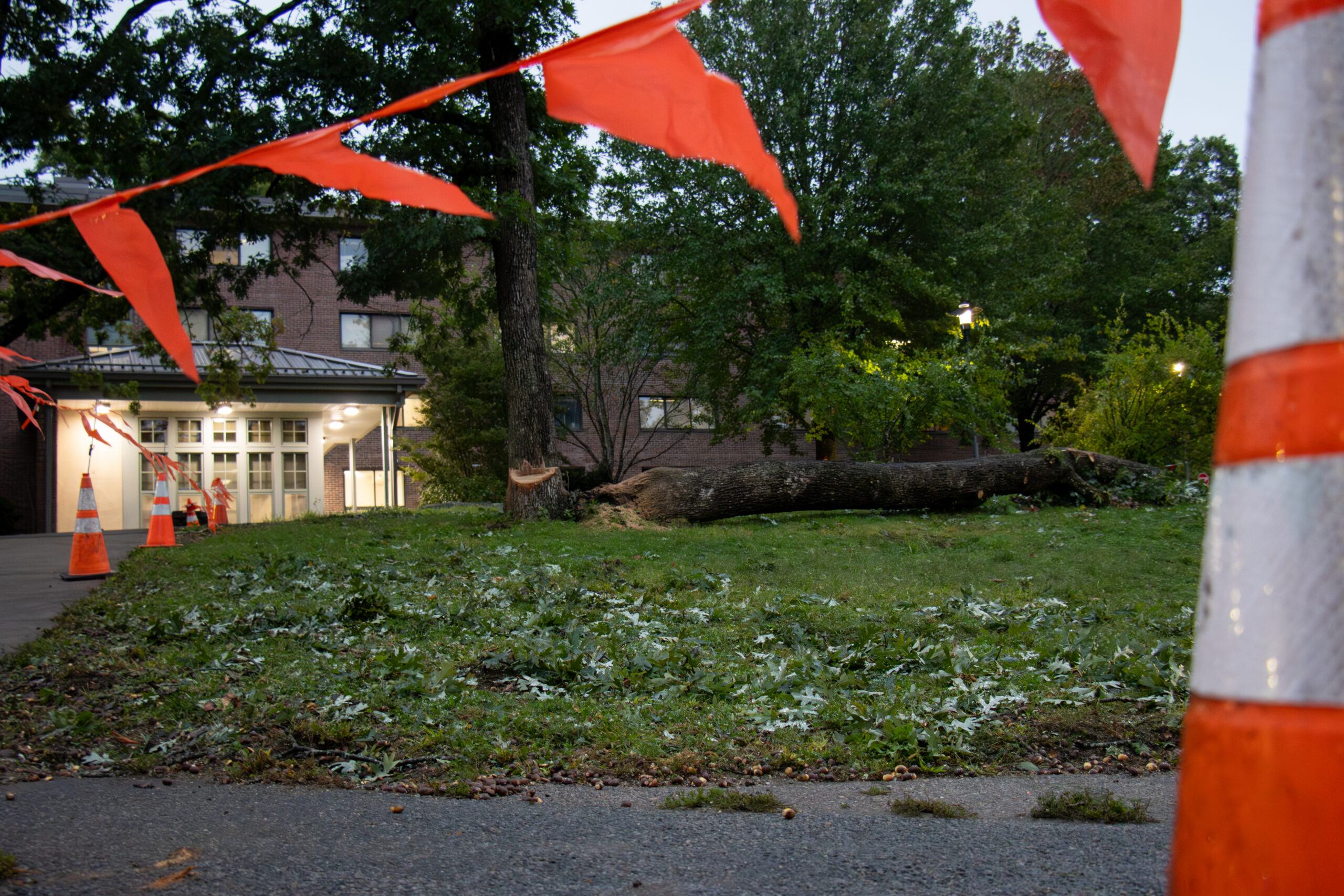
The University of Rhode Island had to prepare themselves from Sept. 25 to the 27 as a nor’easter rolled in on the radar ready to rock the coastal parts of New England.
The emergency management team at URI has a number of tasks it needs to accomplish in order to make sure the university is safe when a threat of a storm comes across the radar.
“We have an overall emergency plan and then we have a severe weather plan for storms,” URI emergency management manager Sam Adams said. “Most Rhode Island cities and towns are storm ready so we plan four to five days out.”
In order to prepare the management team has to identify the different conditions that will be going on when these storms hit and how to address them.
“Our big focus is on identifying what the hazards are for the particular storm,” Adams said. “It might be wind issues or or expecting rainfall, but we knew for this storm the primary hazard at URI was going to be winds with the potential to cause power outages.
It’s all hands on deck when a storm comes in and a lot of effort is put in at URI to make sure everything runs smoothly.
“Everybody in all the key departments have checklists they run through,” Adams said. “Making sure generators are all ready to go, vehicles are all fueled up and then we have extra staff coverage if the storms get worse like the snowstorm.”
The URI Emergency Management team is no stranger to storms. In February a massive snowstorm hit Rhode Island dropping over 3ft of snow and it made it very difficult to get anyone to campus, but that wasn’t even the worst storm that URI’s emergency management team has dealt with.
“I think it was 2015 we had a storm where it kept snowing every week,” Adams said. “Monday classes didn’t meet for the first five weeks of the semester and we were running out of places to put the snow.”
When the storms get dire the emergency management team has a number of departments it talks with to ensure everyone is in the same spot on what to do.
“We do a lot of internal collaborations,” Adams said. “Public safety, risk management, academic affairs, enrollment services and we usually have a member of the faculty senate who sits in on our emergency management advisory council.”
When it comes to determining when URI needs to shut down, sometimes it is not what is going on on campus that is the issue.
“We have canceled where conditions on campus are about as good as they are going to get,” Adams said. “We’re coordinating with towns to get their input as to what’s going and what decisions they’re making.”
The emergency management team has had to deal with people who ignore the warning signs or don’t listen to what they have to say when a storm hits.
“The singular biggest problem we have is people who are not paying attention to parking bans,” Adams said. “It could be a nice day when they leave but it doesn’t occur to them if they are traveling that there might be a snowstorm and if they leave their car someplace we either have to snow it or it is going to get hit with snow from the snowplow.”
For students and staff that go to URI, make sure you are prepared and check emails next time a big storm is going to hit as the emergency management team and all the other departments are working hard to keep campus safe for students and staff from any harmful weather.