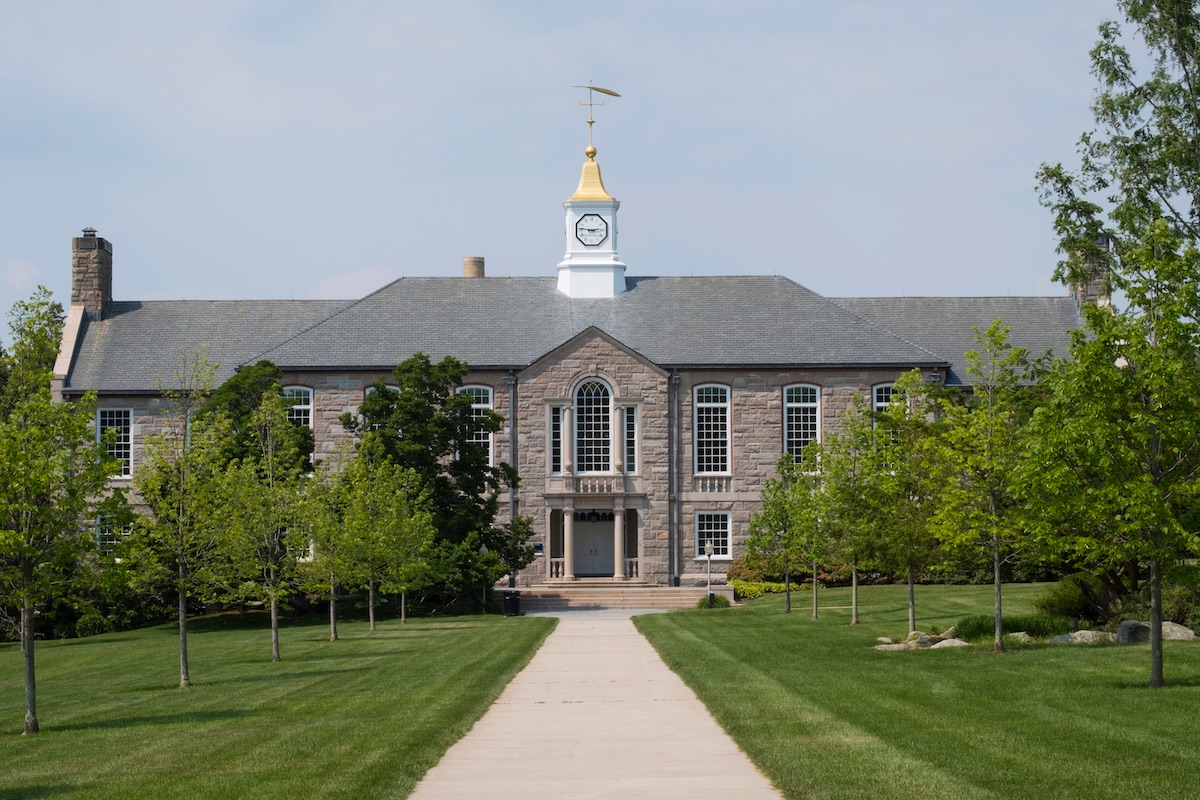

A University of Rhode Island biomedical research program for disadvantaged undergraduates was reinstated after a Massachusetts judge ruled National Institutes of Health grant terminations illegal – a Supreme Court case now threatens the funding again.
On Aug. 21, the U.S. Supreme Court voted 5-4 against Massachusetts Federal Judge William Young’s previous ruling on June 16, giving NIH the ability to stop making payments on $800 million of previously terminated research grants, according to an article from Health Affairs.
The August court ruling puts NIH funded programs like Enhancing Science, Technology, Engineering, and Math Education Diversity once again on uneasy ground, according to URI ESTEEMED Program Director Samantha Meenach.
“I feel like I legit have PTSD from last semester, so the thought of [the grant] being terminated again is gut wrenching,” Meenach said.“I just can’t fathom it.”
If the program gets terminated again, not only will students lose significant resources, the program coordinator, Caroline Duane, will lose her job, Meenach said. With lingering uncertainty, Meenach said the past year has been rough.
When funds were first cut in March, Meenach said she scrambled to work out how to pay for the remainder of the semester. Now that the grant is re-instated, Meenach is left scrambling once again to hire personnel, prepare applications and set up the program.
“We had so many things we had to do to get the rest of the semester paid for,” Meenach said. “I’m hoping that they at least let us finish out the academic year.”
Two years ago, Meenach was awarded a $1.4 million grant from NIH to form URI’s chapter of the ESTEEMED program. In the program, two cohorts of five to seven first and second year students majoring in biomedical sciences are provided with resources, stipends and research experience.
Since its formation, the program has had a wide impact on university students, such as third-year mechanical engineering student and ESTEEMED cohort graduate, Hamzeh Tanbakji.
“[ESTEEMED] not only supplied me with finance, but with research experience that I otherwise wouldn’t have been introduced to or probably even pursued,” Tanbakji said. “It gave me a step by step process to pursue research.”
A program which targets disadvantaged minority students who haven’t been exposed to research, ESTEEMED’s possible termination is nothing but “a racist rhetoric” by the administration, Meenach said.
After the Aug. 21 Supreme Court case, Meenach said she was readvised by a contact at NIH to utilize as much money on the grant as possible, in case the program gets terminated again in October.
“Will I be surprised?” Meenach said. “No. Will I be very upset, yes.”
It is important for people to know that the backlash shown toward the reinstatement of ESTEEMED is not aimed at NIH, but the administration and members associated with it, according to Meenach.
The benefits of the program reach beyond the select group of cohort students, according to Tanbakji and Flores.
“[ESTEEMED] is very beneficial, not just for people in the cohort, but for people [outside] of it, because [the program] holds events inviting people from outside of programs to come and join,” Tanbakji said.
ESTEEMED often hosts resume workshops with outside groups, according to Tanbakjji.
The program isn’t just a research program, it’s a way to expose research to students who haven’t been exposed to it yet, according to second-year cell and molecular biology major and cohort member Daniel Flores.
“They should not terminate it,” Flores said. “Without ESTEEMED, I definitely would not be where I am right now.”