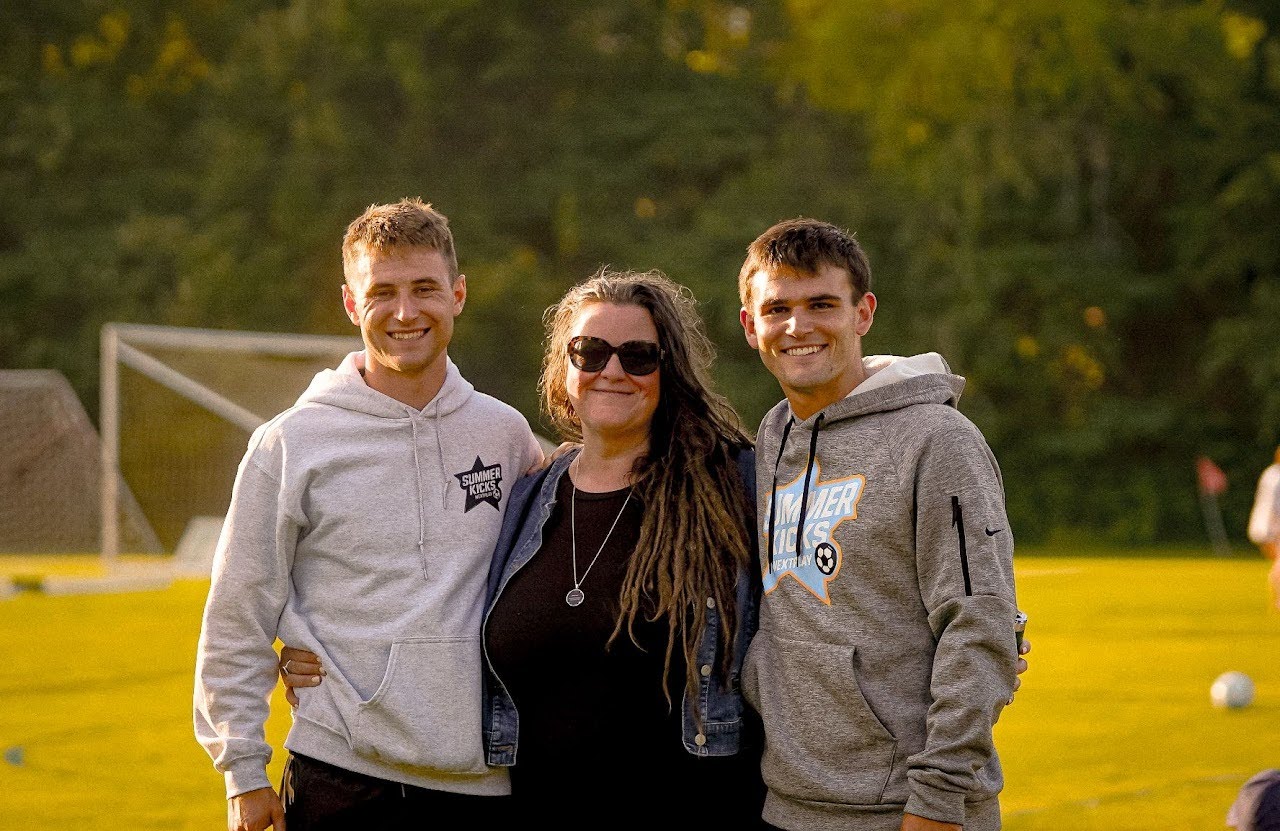

Student senate candidates Kairy Gonzalez, Ryan Niro, Madison Hinrichs and Kyanna Lin for president and vice president took to the stage on Thursday for a debate covering their campaign platforms and policies.
Third-year students Gonzalez and Niro are running for president and vice president, respectively. Chair of the Cultural Affairs Committee, Gonzalez seeks to unionize student workers on campus with the help of the Youth Democratic Socialists of America.
Nina Lima, president of YDSA, endorsed Gonzalez and Niro on their campaign Instagram account, @uripresident.
Director of Communications Hinrichs and her running-mate, third-year student Lin introduced their “Accessibility, Equity and Opportunity” platform during their opening statements.
Hinrichs’ work as a tutor in the Academic Enhancement Center inspired her AEO platform, which would translate to experiential learning opportunities for upperclassmen, like peer mentoring as a requirement for URI 101 classes and campus accessibility.
When asked by moderator Caitlin Curry, senate election committee chair, what their priority would be if elected, Gonzalez doubled down on the labor union concept.
“I know that there’s other communities and student organizations that really want to work on [the labor union] specifically, and we’ll shout out YDSA,” Gonzalez said. “We have already been talking for the past few months and I do want to work with them at some capacity when I’m elected.”
For vice presidential candidate Lin, campus accessibility would take priority.
“I think both [Hinrichs and Lin] initiatives would want to talk about accessibility and making sure that every student feels like they can walk this campus and thrive around this campus, and you know, have the space that they pay for,” Lin said.
On-campus parking availability has been a topic of discussion and action for the student senate, which passed a resolution in October urging Transportation and Parking to reduce the cost of parking passes.
Curry asked candidates how they would address the issue, considering the 20-year plan put forward by the university.
Gonzalez and Niro said communication and transparency between administration and students when it comes to available parking and the ongoing construction changes on campus have brought.
Hinrichs said she would listen to students’ frustrations and utilize established relationships and channels of communication.
While the majority of the prescreened questions related to local and campus matters, the national state of “difficult, depressing times” was spotlit by Curry, who asked how candidates would support the student body.
The senate is a technically non-partisan group, which posed difficulty in her work as DOC, according to Hinrichs.
“I spent a lot of my time working with other students, working with other faculty, other leadership networks, and going to these people and saying that we need to approach these situations, get out these posts in a way that are not offensive, and are helpful to students,” Hinrichs said.
Gonzalez referenced the resolution passed in the senate for legal retainer for undergraduates detained by Immigration and Customs Enforcement, which she put forward.
“I have family, I have friends that are undocumented,” Gonzalez said. “And I have friends in this institution who are scared. They’re scared in this process.”
Niro said he would use the network of both undergraduate and graduate students to create support.
Candidates were asked how they would work with vulnerable student populations, where Hinrichs put forth her peer mentoring initiative, aimed at assisting first-year students who might be unaware of the opportunities and resources available to them.
Lin said she would use her experience as an Asian Cultural Ambassador to speak to multicultural organizations.
Being out and in public as a senate member and meeting constituents where they were was a key part of representing vulnerable students, according to Gonzalez.
“When parking transpired, you know, the higher parking permits alongside less parking spaces, I didn’t know anything about it,” Gonzalez said. “And then I had a couple friends when I was a [Resident Assistant] telling me, ‘Hey, this went up dramatically, I can barely afford this.’ And although I wasn’t in the situation of having a car, or paying parking insurance, I was outside.”
In their closing statements, the candidates harkened back to their platforms and experience.
Niro said his position as a student representative on the faculty senate allows him to bring different groups of students and faculty together, similar to his position as vice president of the Badminton Club, which he would use to advocate for club sports.
Hinrichs, who is eligible to graduate this spring, said it was her choice to be in the senate and remain on campus which is evidence of her dedication to students.
“I’m here because I care,” Hinrichs said.
Connections with professors in the political science and criminal justice departments would also make her a valuable asset, according to Hinrichs.
Gonzalez said she has had three years of experience in the senate legislative body, as well as a role on the University Diversity Council as an undergraduate representative.
“There are so many things that I have done that show that I care for students, that the students matter, and they’re a necessity to listen to,” Gonzalez said.
Lin circled back to the AEC platform and her and Hinrich’s ability to take meaningful action as a team.
“Things can be accomplished under proper leadership, and I promise that the Hinrichs-Lin administration will commit itself to ensure the University of Rhode Island undergraduate student population’s success.”
Voting for the student senate president and vice president is open on URInvolved until Thursday.