As it approaches the completion of its sixth semester running, the Therapeutic Horticulture Group is gearing up to celebrate with pie and plants in the Heber W. Youngken Jr. Medicinal Garden greenhouse.
Participants in the group find solace in nature through mindfulness activities, gardening and the design of a new garden to attract pollinators outside Avedisian Hall. The group is limited in numbers and asks prospective members to commit to seven 90-minute sessions throughout the semester.
Hosts Warren Schwartz, a psychologist and URI Master Gardener and Elizabeth Leibovitz, coordinator of the Youngken Medicinal Garden, brought their combined expertise together to create an experience tailored to the needs of college students.
“With college students, I think the main thing was thinking about stress and feeling disconnected from the natural world,” Leibovitz said. “Connecting with the natural world is an antidote to feeling alone, feeling isolated, feeling stressed out, by recognizing that you’re part of something bigger.”
After experimenting in the first year, the two developed a formula with three main components: mindfulness, eco-literacy and meaningful work.
Sessions begin with a therapeutic framing by using mindfulness activities such as meditation and breathing techniques, according to Leibovitz. The activities sometimes focus on coping skills for managing stress, academic responsibilities and dealing with tragedy.
“There’s something about nature that fosters an existential state of mind,” Schwartz said. “When we’re in nature, we experience law, but we also can experience things like fear, finality. We come right up against death, frustration, limits. So the present focus that we try to instill with the meditation carries over into the meaningful work that we do.”
Though the therapeutic aspect is beneficial, students most frequently express interest in the program out of a desire to work with plants, according to Schwartz.
“We have a form that we ask students to fill out before they enter the group, and so often they’ll write, ‘I just want to get my hands in the dirt. I just want to be outside. I just want to be with plants. I love plants,’” Schwartz said.
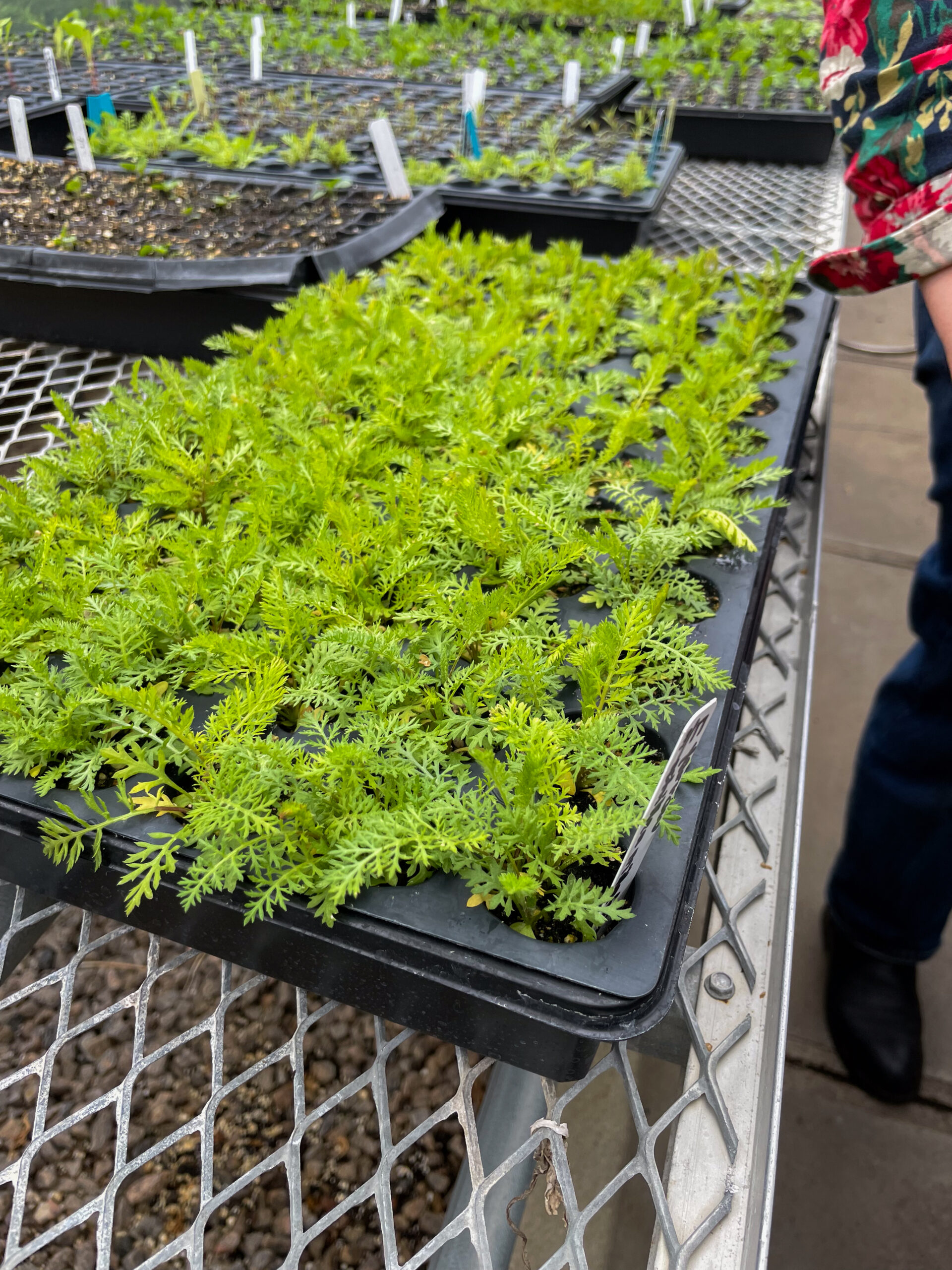
After getting grounded, the group moves into hands-on ecological education or working in the greenhouse. Participants have been working on a “pollinator pathway,” a garden on a parcel of the lawn outside Avedisian Hall designed to attract pollinators to campus. The parcel was left over after the construction of the building, according to Leibovitz.
“There’s nothing there besides whatever weeds were popping up, so the group is gonna redesign it for native insects, trying to plant native plants mostly and native ecotypes if that’s possible,” Leibovitz said.
The seeds for the pathway are genetically adapted to support local plant communities by the Rhode Island Wild Plant Society, according to Leibovitz. The society adapts seeds to preserve native regional genetics instead of importing native seed from different regions. Genetic diversity makes native plantings more resilient to climate change by preserving more traits to fall back on when conditions change.
“A lot of the work that we do is not, a lot of the work that they do is not tangible or immediately helpful, but this is,” Schwartz said. “Its beautification is part of it, but more importantly, the making of an actual material improvement in the ecology of our campus.”
Leibovitz recently got the project certified as a monarch butterfly way station.
“It’s a nice face for the project,” Schwartz said. “The monarch is sort of a poster child for pollinators because it’s beautiful. It’s a beautiful animal and people get very attached to it.”
In the final group session, participants celebrate their work over pie and reflect on their experience. Students often share that they enjoyed the collaborative work and being introduced to the world of horticulture, according to Leibovitz.
Over the years, the two hosts have found that getting their hands in the dirt with students can not only provide a sense of agency and impact but also teach acceptance.
“Plants are very good at teaching us our limits,” Schwartz said. “They’re very good at teaching us frustration tolerance. They don’t always do what we want them to do. Pests certainly don’t do what we want them to do. So we come up against that, and that’s a good thing, to recognize that you’re not the one who’s always in charge.”
The Therapeutic Horticulture Group meets on Mondays from 3 to 4:30 p.m. in Heber W. Youngken Jr. Medicinal Garden Greenhouse #116. Students interested in joining for the fall semester can fill out a short application on the URI website.