
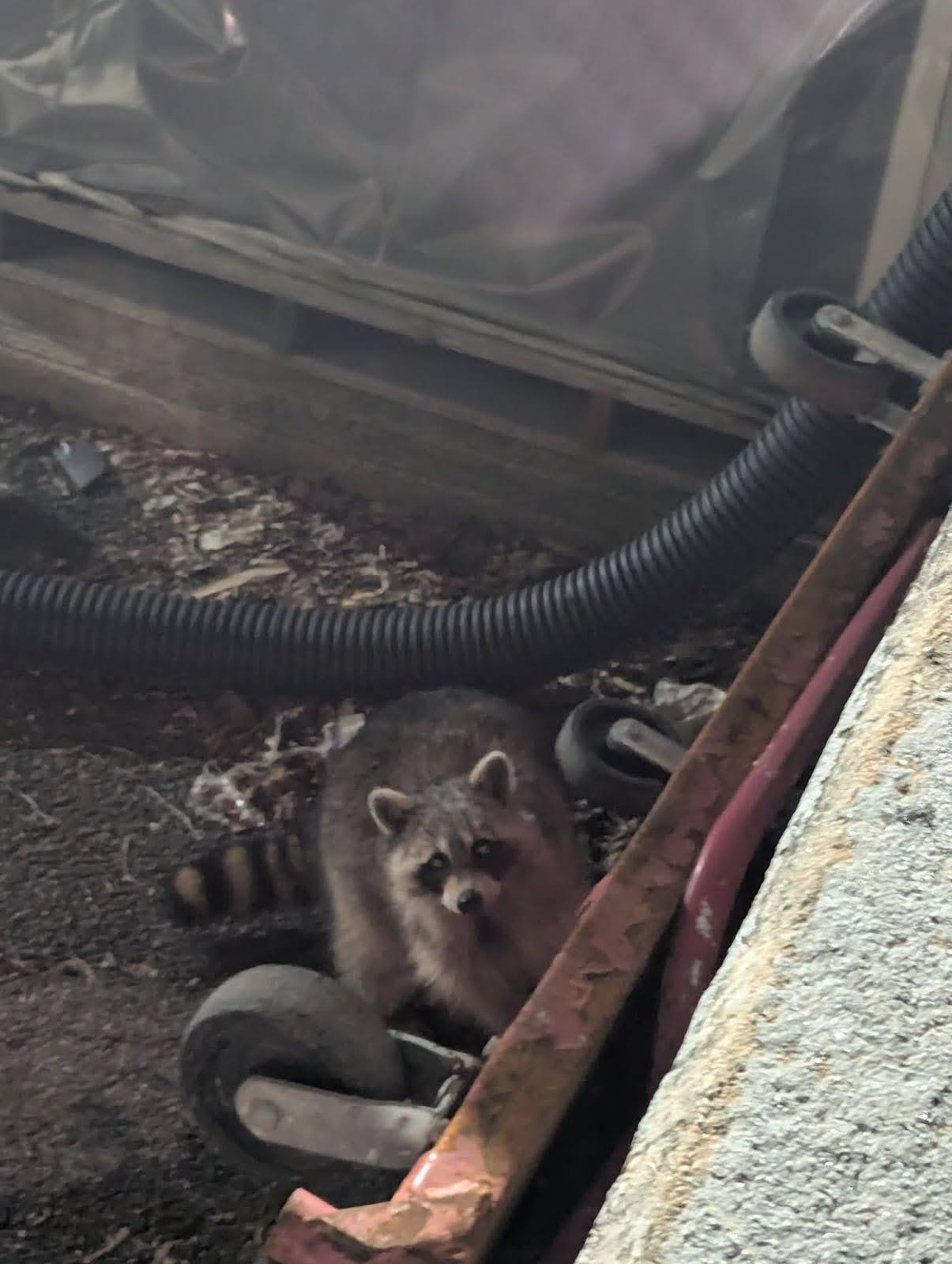
Procyon lotor—the raccoon—is a mid-size mammal native to North America.
The raccoon has expanded its range due to human activity in several ways.
As a result of intentional introductions gone awry, the raccoon has become quite the nuisance and invasive species in parts of Europe.
In a similar situation, the successful and culturally impactful 1997 animated TV show “Rascal the Raccoon” caused many in Japan to keep raccoons as pets. This resulted in hundreds of released and escaped pets that took over the archipelago.
In less of an invasion and more of a reclamation, raccoons the world over have been particularly well equipped to deal with the urban environment. What was once woods and marshes has become concrete jungles, but unlike the vast majority of the world’s organisms, the raccoons don’t seem to mind as much.
Don’t get me wrong, I’m sure they would really prefer not to have to deal with fast-moving cars or blinding street lights, but it just might be worth it to rummage through some trash to find something delicious.
Part of their success is just how adaptable they are. I personally see them as the quintessential mammalian generalist. This is exemplified to an extreme in their diet, which, on average, has around an equal proportion of plant matter, invertebrates, and vertebrates, achieving a better balance in the force than any Jedi post-Episode VI.
Raccoons are primarily nocturnal, making nighttime primetime for sightings. In the cover of pale moonshine is when you’ll likely see this critter on campus, scurrying through the rummage. This also makes the raccoon a more familiar critter to night owls on campus. A sighting is likely going home from the 24-hour room back to your rickety dorm in the wee hours of the morning in the warmer months of the academic year.
Few animals are as polarizing as the raccoon. Some see the critters as absolutely adorable and personable animals, while others refer to them as “trash pandas.”
I don’t know what to tell you guys; it’s not the 1700s anymore. We worked out the phylogeny and determined that they are closer to otters than pandas, which, in my opinion, makes sense if you squint.
But yes, early naturalists indeed thought that raccoons were bears, which isn’t as big a leap as it seems when you compare their ecology and skeletal system.
A further inquiry into these critters really does show just how unique they are. Their hands are particularly developed and tactile, being able to handle objects with ease. Beyond just pure digits, raccoons have one of the most highly developed senses of touch in the animal kingdom. A raccoon’s cerebral cortex is the most highly specialized for tactile impulses, more than any animal studied so far.
Because of this, don’t be surprised if you find yourself touched by these fascinating critters; they are better at it than anyone.
Although these critters appear to be cute and cuddly, it is highly recommended that you keep your distance. First off, just don’t be that guy who harasses raccoons for no reason. Second, if you do, you’ll likely have to deal with the various diseases that raccoons are a vector for, including rabies, parasites and roundworms.
So next time a late-night campus stroll calls to you, dress appropriately, take a buddy and keep your eyes peeled and your senses honed for the university’s most iconic trash enthusiast.