
The University of Rhode Island’s Institute for AI and Computational Research will bridge the gap between research and education, providing learning opportunities for faculty and students.
The IACR began as the Center for Computational Research and has expanded to include the work of the university’s AI Lab and IT Research Computing for the 2025-2026 school year.
“The idea of this institute was to bring all these entities together, because they are essentially doing bits and pieces of what should really be done together,” IACR Director Gaurav Khanna said.
The transition from CCR to IACR has been over a year in the making, according to Planning Committee Member Yan Sun. It involved a planning committee with professors and faculty in fields ranging from oceanography, to engineering, to pharmacy, to business.
“[The] planning committee looks at, ‘What if we have this institute, what are the great things we can do?’” Sun said.
As the IACR continues its launch, professors from a wide variety of disciplines remain on its advisory group, according to the IACR’s website.
“AI and computational research actually touches every aspect of work,” Sun said. “It’s not just engineering, it’s not just oceanography, so having a diverse perspective is very, very helpful and we can inspire each other.”
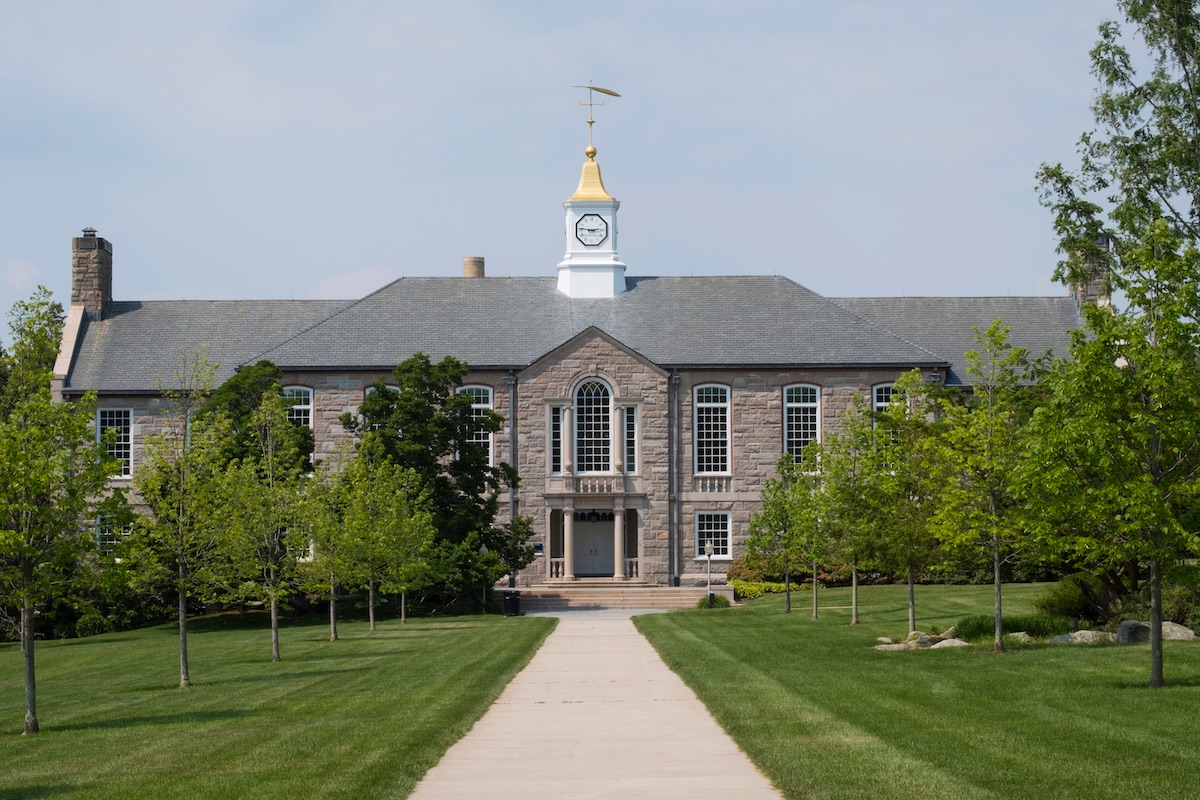
The IACR’s inception required meetings with the library, IT Services, the Faculty Senate, the Provost’s office and University President Marc Parlange, according to Khanna. The final step in CCR’s name change was housing all of its combined staff and funding in its home on the second floor of the library.
For undergraduate and graduate students, the IACR is running free workshops to help students gain understanding in its disciplines, Khanna said. Additionally, the IACR offers a paid or for-credit internship opportunity to students.
“Students can sign up any time and leverage [the workshops], and we’ll be doing a lot more of that with the resources we have now,” Khanna said.
Although the IACR generally caters to graduate students, due to the sheer size and capability of its resources, undergrads should take advantage of it as well, Khanna said.
“Undergrads start doing research, they realize they’re going to have to know these tools,” Khanna said.
Another goal of the IACR is to bridge the university’s colleges and have cross-college collaboration, according to Khanna.
“We’re trying to propose a new program, which is called Interdisciplinary and Applied AI, and the idea is that you could have a student that enrolls in this and get some core understanding, but not to the level that they would be doing deep programming,” Khanna explained.
In the program, students would use these core foundations to make connections between life sciences, oceanography, engineering, as well as any other fields they may be interested in, according to Khanna.
Looming over the IACR are growing controversies surrounding AI, most notably its ethics and place in academia in general, according to Khanna. His approach is to keep moving forward with an increased awareness of possible pitfalls and how to mitigate them.
“What [increased awareness] means is that we will always be engaging with faculty entities that have an understanding of the AI ethics and all the issues surrounding it,” Khanna said. “We’ll always make sure that we try our level best to avoid and prevent any possible damage that will result from our activities.”
Khanna acknowledged that the IACR will make mistakes along the way and that those are part of the learning process.
Students and faculty need to continue learning about AI on their own, despite now having the IACR as a resource, Sun said.
“We have a center on campus,” Sun said. “We’re not all set. We need to keep on learning.”
Additionally, Sun said that users should understand the impact of these large language models that power generative AI and be responsible for their actions.
As the IACR continues to develop and expand, Khanna hopes university members will explore and see what it has to offer.
“At URI, we want to do it all,” Khanna said.