
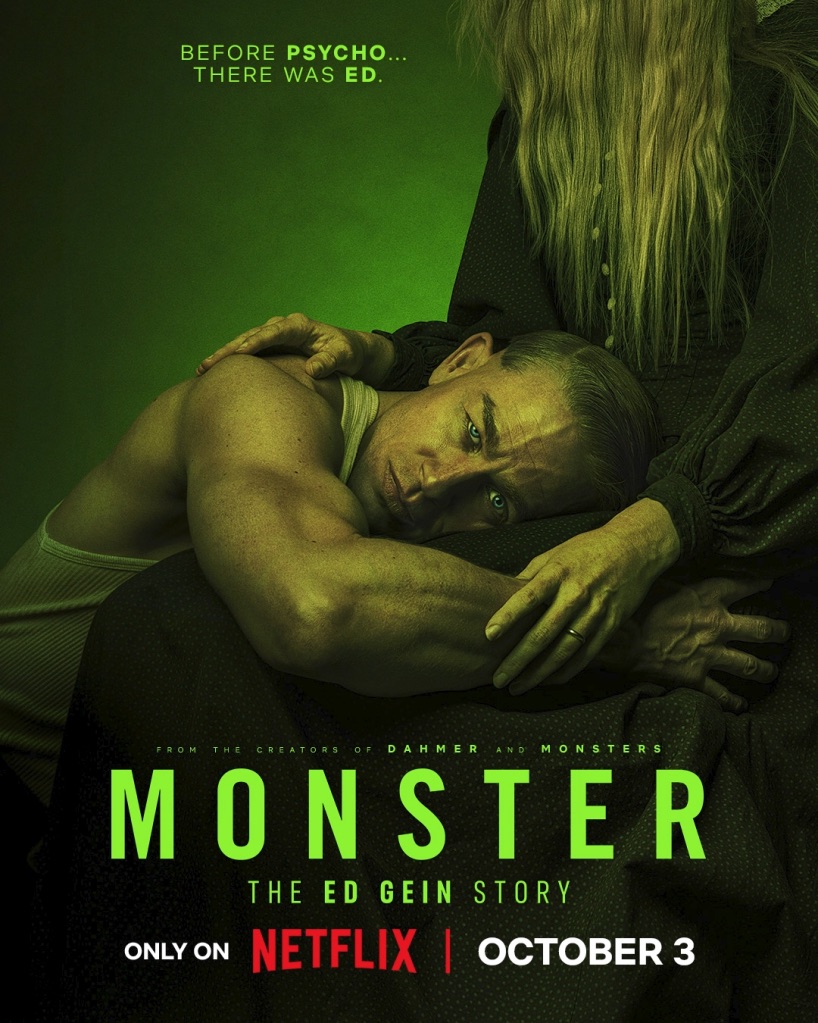
Netflix’s latest entry in Ryan Murphy’s “Monster Anthology, The Ed Gein Story” is unsettling for all the right and wrong reasons.
It’s eerie, beautifully shot and soaked in the kind of cold Midwestern dread that creeps under your skin. But beneath the snow, silence and cinematic polish, something feels missing.
The show can’t decide whether it’s a psychological character study, a horror homage or a commentary on our obsession with real-life killers. It aims to be all three, but doesn’t fully land any of them.
Charlie Hunnam gives everything he has to playing Gein, and it shows. His performance is raw, committed and at times quietly haunting. Still, he’s working against a script that loses sight of its subject.
The writing brushes up against themes of trauma and isolation, but, every time it nears something meaningful, it cuts to another stylized moment of brutality. It’s a show that wants to say something profound but keeps drowning in its aesthetic.
Murphy and co-creator Ian Brennan have said this season is meant to question why we glamorize serial killers. Yet “Monster” ends up indulging in the very sensationalism it claims to critique. The violence, often shot with voyeuristic precision, blurs the line between horror and spectacle.
When a show about dehumanization starts to look like an aesthetic showcase, it undercuts its own message.
To its credit, the craft is impeccable. The production design captures the isolation of 1950s Wisconsin, the sound design hums with unease and the pacing keeps tension tight. When the show slows down, when it lingers on Gein’s loneliness or the aftermath of what he’s done, it hits hard.
Those moments are powerful, even moving. But they’re too few, buried under layers of shock value that add noise instead of depth.
What sticks isn’t Gein himself — it’s the audience. It’s us. We binge these stories, analyze them and post about them. And “Monster” knows that.
It almost turns the camera back on viewers and asks, “What exactly are you looking for here?” That question lingers long after the credits roll. Not the crimes, not the gore, but the uncomfortable thought that maybe we’re part of the cycle.
In the end, “Monster: The Ed Gein Story” is chilling and technically impressive, but it mistakes atmosphere for understanding. It’s haunting but hollow. For a show about the dangers of dehumanization, it forgets to show much humanity at all.
And maybe that’s the real horror — not the man it portrays, but how easily we keep watching him.