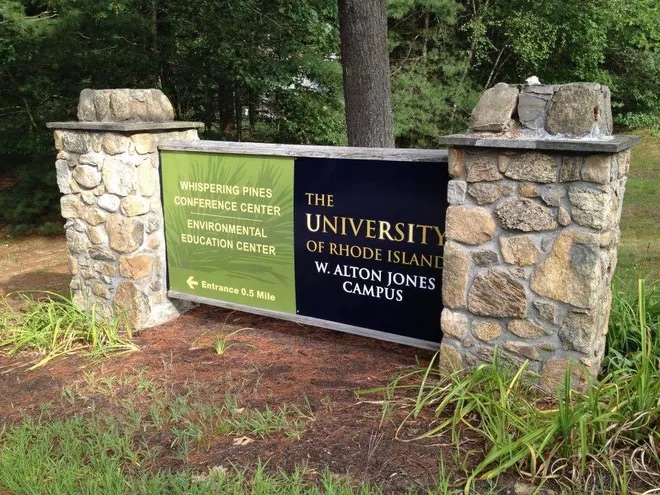
Since the announcement of reopening the W. Alton Jones Campus on June 27, the environmental education students program has expressed concern over its utilization at a Board of Trustees meeting.
The plan for the campus reopening was to lease it to the Rhode Island Department of Environmental Management, according to Sara Sweetman, an associate professor in elementary and environmental education at the University of Rhode Island. When the campus was leased, there was miscommunication about how the DEM would use it. University members thought DEM would run education programs for children, but the agreement showed nothing about bringing them back.
For decades, the campus prohibited hunting in order for children to study nature and history in a protected environment, according to Sweetman. Now that the campus is under the direction of the DEM, the policies could change, impacting its future for children and university students.
If the terms were to change, children and URI students would miss out on environmental education opportunities, according to Sweetman.
“Utilize the expertise of current academics and staff to build the school and summer camps,” Sweetman said. “Make reopening great for the young people of this state, both children and university students who yearn to have opportunities like this to learn and grow.”
Environmental education students had the opportunity to visit the campus as part of coursework for the program, according to fourth-year student David LaClaire at the Board of Trustees meeting. During the visit, the students said they felt like a part of something bigger than themselves. They were hopeful that the campus would welcome children into student-led summer camps and change their lives by bringing them to the woods to learn.
One environmental learning experience the campus had to offer was an overnight summer camp for children, according to second-year student Islan Harpole. Campers spent their time on the campus without technology, relying on the woods for activities. When the campus closed, many youths were deprived of those opportunities.
Within the environmental education program, one class, Environmental Education Research and Funding, could benefit from the campus, according to Harpole. The class teaches students how to financially support organizations through grant writing, which is how the majority of education jobs and programs are funded. By utilizing the campus, environmental education students would gain knowledge that could help the program be self-sustained.
“We urge you to think about the benefits that the environmental education program could have, not only to the students but aspiring youth in surrounding communities,” Harpole said at the board meeting.
Other education majors are required to student-teach to complete their degree, according to a public comment at the meeting made by Lydia Smith, a second-year student at URI. By student-teaching, education majors gain real-life experience in a classroom. However, there is a lack of university support for environmental education majors to have the same opportunities.
The environmental education program seeks to be involved in the decision making for the use of the campus, according to Smith. Members of the program are prepared to do the necessary work to graduate, but in order to do so, they need the campus to fulfill their opportunities.
“We care deeply about the W. Alton Jones Campus and its future,” Smith said. “It highlights a uniqueness and a special public interest to URI and provides education for surrounding schools.”