The University of Rhode Island Memorial Union has stopped subsidizing Rhode Island Public Transportation Authority bus passes for disabled students, as of July of this year.
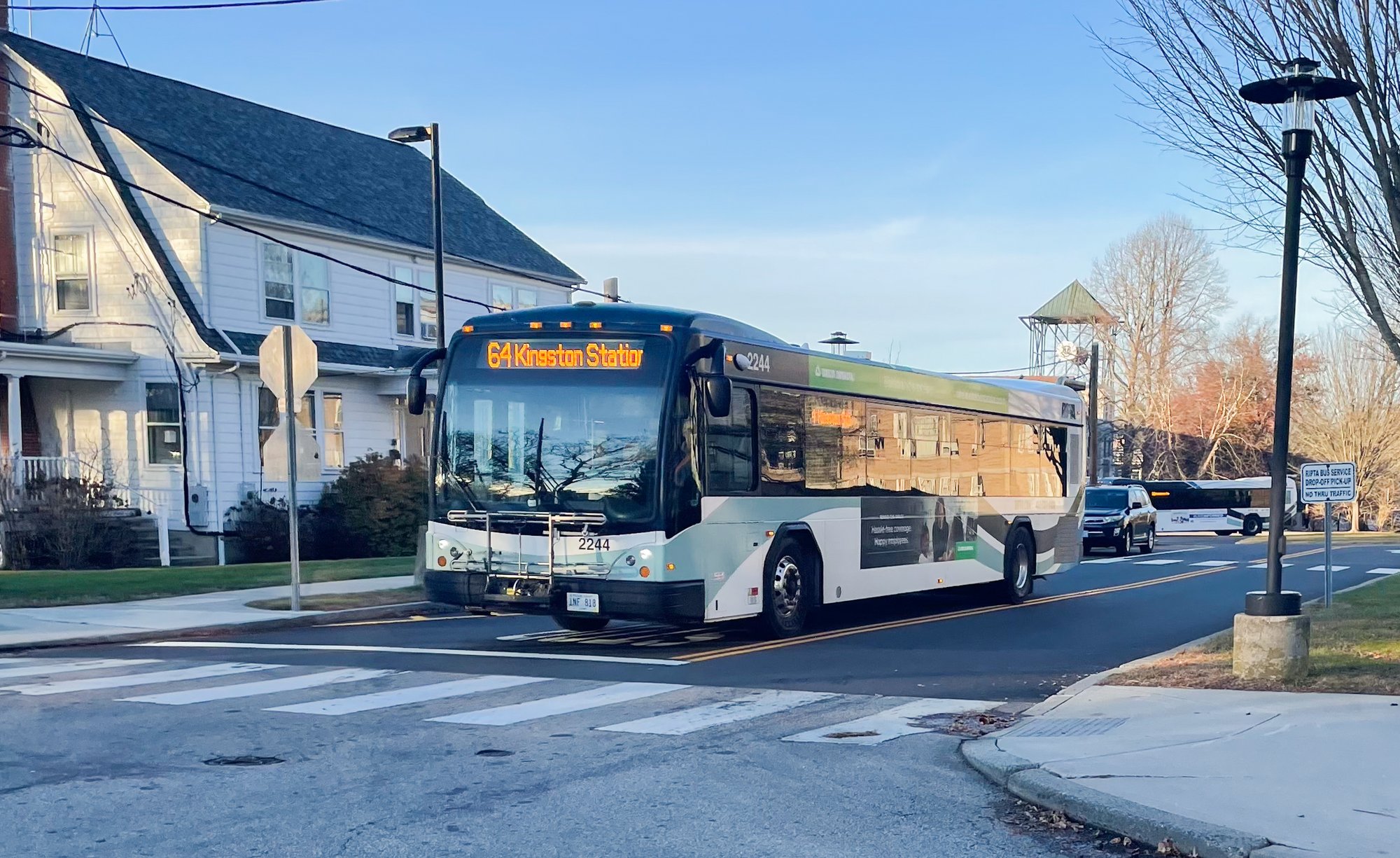
In 2022, RIPTA began using the Wave Card system, according to the RIPTA website. Wave cards, physical or digitally loaded cards, can be used to pay for RIPTA services. Digital card users can load money in increments of five, beginning at $5, from the RIPTA Wave app. All RIPTA fares are now through Wave cards or cash.
At URI, students can access RIPTA fares at a discounted rate through the Memorial Union. The Union has managed RIPTA passes since July 2025, according to Melissa Boyd-Colvin, the director of the Union. During that time, the university has not made any changes to RIPTA fares.
Before July 2025, disabled students were able to access Americans with Disabilities Act RIPTA passes for free through the campus store. The university covered the cost from June 2024 to July 2025 because the Wave app was unable to support ADA passes, according to Boyd-Colvin.
Currently, all-day RIPTA passes are offered for $6. URI students can purchase them for
$3 through a discount facilitated by URI. For students with ADA passes, lower-priced passes available for those with disabilities are available for $4 or for $2, with the URI discount. One-way passes on RIPTA are $2 each.
Disabled Americans struggle with costs more than abled Americans, according to data from the National Disability Institute. Americans with disabilities that limit their ability to work, on average, require 28% more income to reach the same standard of living as an able-bodied American. Working adults with disabilities are twice as likely to have income below the poverty threshold.
“Living with a disability has tons of hidden costs,” URI Disability Advocacy Group co-founder Annette Bourbonniere said. “And while some may say ‘Well, why should they get a break?’ the reality is [disabled students] don’t have the same options as everyone else.”
Bourbonniere pointed to other issues of accessibility, such as getting to the Kingston Campus.
“The state has not got a real reliable, accessible transit system, like many other states do,” Bourbonniere said. “[RIde Paratransit Program] works within this three-quarter mile of the regular RIPTA system, but if the RIPTA is not running at that time, there’s no RIde either.”
The RIde Paratransit Program is an RIPTA-provided service that allows disabled riders to travel within three-quarters of a mile of a fixed bus route. RIde is available for $4 each way, double the price of a standard RIPTA ticket.
“In general, URI has no reasonable concept of disability,” Bourbonniere said. “[Disability, Access and Inclusion] primarily focuses on academic accommodations … but when it comes to mobility needs, this university gets an F minus. Think big? No, not when it comes to disability.”
Bourbonniere emphasized not only a lack of understanding but also a lack of general knowledge.
“[The university] can’t tell the difference between compliance and accessibility,” Bourbonniere said. “The ADA prohibits discrimination and all the other [rules about] so many feet for this, so many inches for that, that’s compliance. That’s not necessarily going to accommodate everybody. Accessibility means anybody can use it.”
URI recently received money for accessibility improvements, but Bourbonniere said she has yet to see any real change.
“They have this so-called accessibility task force and sometimes, well, I am unclear as to what they have actually accomplished,” Bourbonniere said.
The accessibility task force was consulted during the composition of the 2023-2033 Strategic Plan, according to URI Director of Capital Projects Paul DePace. The task force includes a number of representatives from across URI’s departments, including capital projects and the Office of Disability, Access and Inclusion. There are currently two open positions on the task force for undergraduate and graduate student representatives.
“When a student brings an issue forward about accessibility, we strive to make that a priority,” DePace said. “The university has made a couple of advances in the area of wanting to improve accessibility.”
The funding Bourbonniere mentioned was received from the Rhode Island state government and earmarked for improvement to campus accessibility, according to DePace. The funding will be disbursed over the course of five fiscal years. The school has received $2.3 million for this fiscal year. $1.2 million will be used to renovate the elevator in Roosevelt Hall.