
Through scientific innovation, vast amounts of research and a world-wide community, The 5 Gyres Institute has been at the forefront of battling the global issue of plastic pollution.
The 5 Gyres is a science-based, solutions-oriented non-profit. Their science focuses on a sector-based approach, targeting different sectors that lead to microplastic pollution, studying their emissions and trying to find solutions to reduce them.
Founded in 2009, the institute works at the state level, mostly in California and Florida, as well as at the national level to support policies that can reduce plastic pollution and the potential harms it may have on the environment and human health, according to the institute’s website. One of the institute’s current campaigns, Microplastic-Free United States, aims to gain support to petition lawmakers to introduce legislation that curbs plastic pollution.
“Unfortunately, even with the number of alarming studies and reports over the last few years on the issue, there continues to be an increase in plastic production,” the website said. “With direct links between the plastic crisis and the climate crisis, addressing plastic pollution globally must be a major environmental priority.”
The name of the institute is in reference to the five main subtropical gyres located in the North and South Pacific, the North and South Atlantic and the Indian Ocean, according to the 5 Gyres website. A gyre is a large-scale system of wind-driven surface currents in the ocean, and these five main subtropical gyres are massive circular current systems where a large majority of our plastic accumulates.
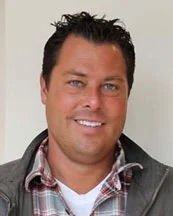
URI alum Victoria Fulfer, ‘24, a microplastics scientist of 5 Gyres for the past two years, leads research projects related to microfiber emissions to the air and microplastic pollution in the coastal environment and has translated science into policy actions and solutions, completing research projects in Rhode Island.
This past summer and fall, 5 Gyres tested floating wetlands at three locations around Rhode Island according to the institute’s website. Floating wetlands have been used to filter, or trap pollutants such as excess nutrients and pesticides, in retention ponds for many years.
“My recent study showed that Rhode Island salt marshes can trap 10 times the amount of microplastics as the nearby seabed,” Fulfer said. “That made me think that floating wetlands could be a good solution in areas where we no longer have natural wetlands but still do have a lot of microplastic pollution, such as the shores of urban areas like Providence.”
While the study isn’t complete, the results still bring hope, according to Fulfer.
“We are still working up those results,” Fulfer said. “We hope to be able to use our floating wetlands research to recommend this as a nature-based solution to coastal microplastic pollution.”
A URI study from August 2023, where Fulfer was one of the main researchers, found that the top two inches of the floor of the Narragansett Bay contain thousands of tons of microplastics.
5 Gyres have studied the issue in Rhode Island, but there is no solution to clean up the pollution in the works yet, according to Fulfer.
“There are currently no plans in place for this,” Fulfer said. “You can’t simply just filter microplastic pollution out of the Bay, or vacuum it off the seafloor.”
Despite the issue, there is a course of action that Rhode Island can take, according to Fulfer.
“The most important action Rhode Island can take is to turn off the tap of plastic production,” Fulfer said. “Implement policies that limit the use of single use plastics, increase practices such as street sweeping and urban rain gardens, which can decrease plastic pollution in stormwater runoff, and think about implementing nature-based solutions for microplastic pollution before it reaches the ocean.”
For anyone looking to get involved with the organization there are multiple options, according to Fulfer. One of them is to join the organization’s ambassador network, which currently holds 2,000 ambassadors from around the world. Another is by downloading the app TrashBlitz, developed by 5 Gyres. The app allows people to log trash they find. 5 Gyres tracks the types of materials found and the brands, in order to understand trash dispersion across different environments, as well as push to hold brands accountable in the future.
For more information on 5 Gyres, you can find them on their website.