As the conflict between the United States and Iran wages on, gas prices continue to rise, causing University of Rhode Island students to make tough decisions when it comes to their finances.
President Donald Trump gave the go-ahead to move forward with Operation Epic Fury, a joint military operation with Israel, according to Britannica, on Feb. 27. The following day, at 06:35 UTC, the United States Central Command announced that, along with partner forces, it began airstrikes on Iran.
Strikes between the U.S. and Iran continue on. While the U.S. has not officially declared war on Iran, Trump has continually referred to the conflict as a “war,” raising tensions across the globe. The attacks on key energy infrastructure as well as strikes close to the Strait of Hormuz, an important global oil shipping route, has slowed the movement of crude oil world worldwide.
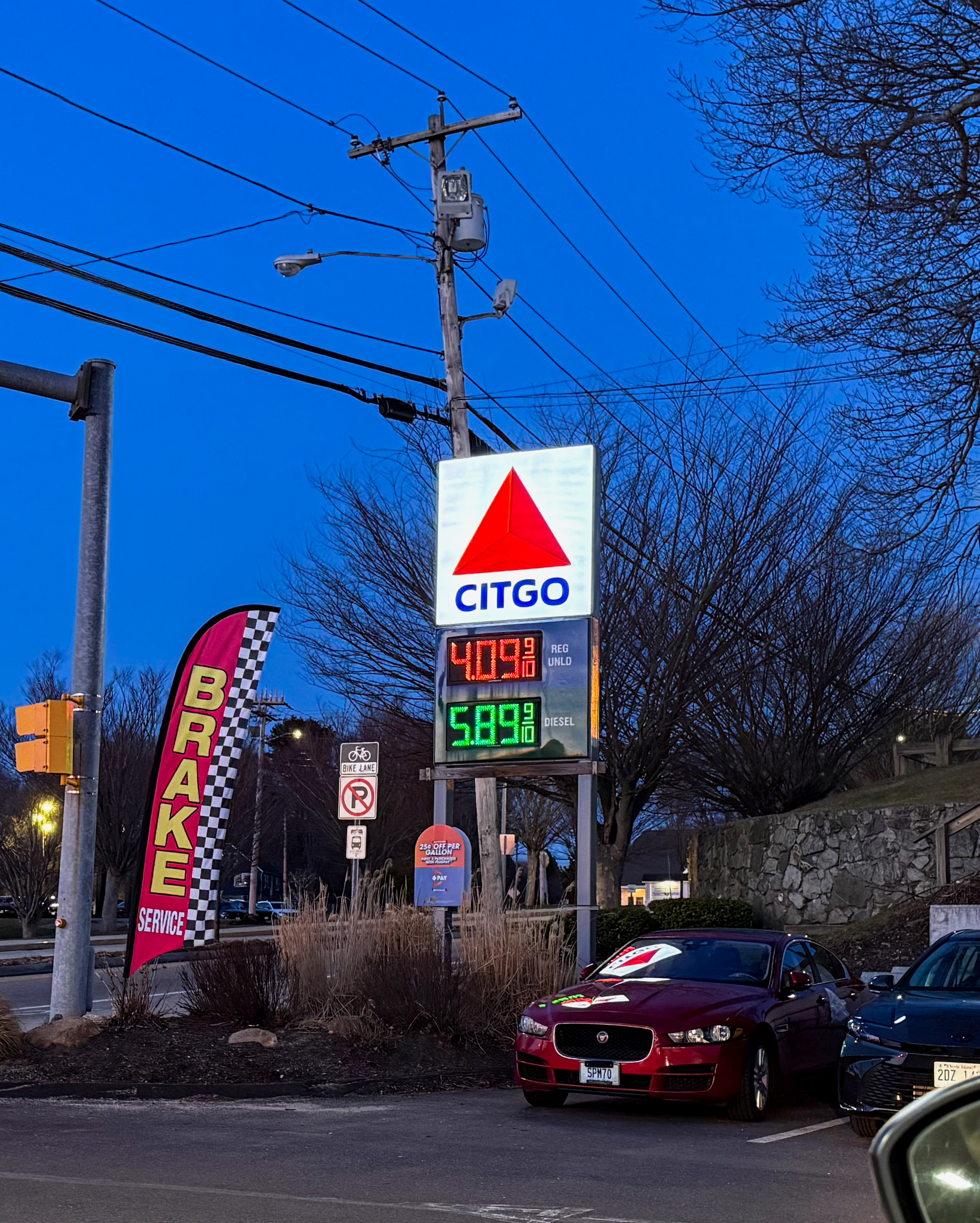
In Rhode Island, the price of gas has increased 17 cents a gallon in just the last week, increasing the average price from $3.82 to $3.99, according to the Westerly Sun. For commuter students at URI, the gas pump has been upsetting, according to third-year Collin Decelles.
“Every time I go to the gas station, I get really upset,” Decelles said. “I get upset about it and then I pay it anyway. Sometimes I go to the ATM and I take out cash so I can save 10 cents. That’s pretty impactful these days.”
As of April 1, the national average gas price is $4.06, according to SmartAsset. Many states have seen a 33% year-over-year increase in the cost of a regular gallon of gas, such as Florida and Arizona, who’ve seen a 37% increase.
The increase has been worse for diesel, with costs increasing by over 60% in Arizona, South Carolina, Nevada, Texas, North Carolina and Florida, according to SmartAsset. Nationally, the price has increased by just over 50%, from $3.62 to $5.43.
URI students have felt like they need bank assistance when going to the pump, according to first-year Lucas Shapiro.
“Every weekend, I drive to my grandparents’ house [in West Greenwich] to have dinner with them,” Shapiro said. “Every time I go to fill up my gas tank and I see it’s like $4 [a gallon], I always say ‘I’ve got to take out a loan to pay my gas.’”
In order to pay for gas, students have had to make sacrifices in other areas, according to Shapiro.
“Stuff I would usually have money for, I have less of an ability to do them.” Shapiro said. “I have to put all of my money into filling up my gas tank.”
In cases of longer trips, students have had to save more in order to afford them, according to second-year Luke Timothy Burgo.
“I have to go to Cincinnati tomorrow,” Burgo said. “I’m staying there for a week, so I’ve been trying to save up while also having to pay for gas to get to school every day. It’s really been hurting my pockets, and emergency expenses and stuff are making me super anxious. I really wish the gas prices would go down.”
With no end to the gas price increase in sight, students will continue to save in any way they can to afford gas. As the conflict continues, URI commuter students will continue to pay the price.