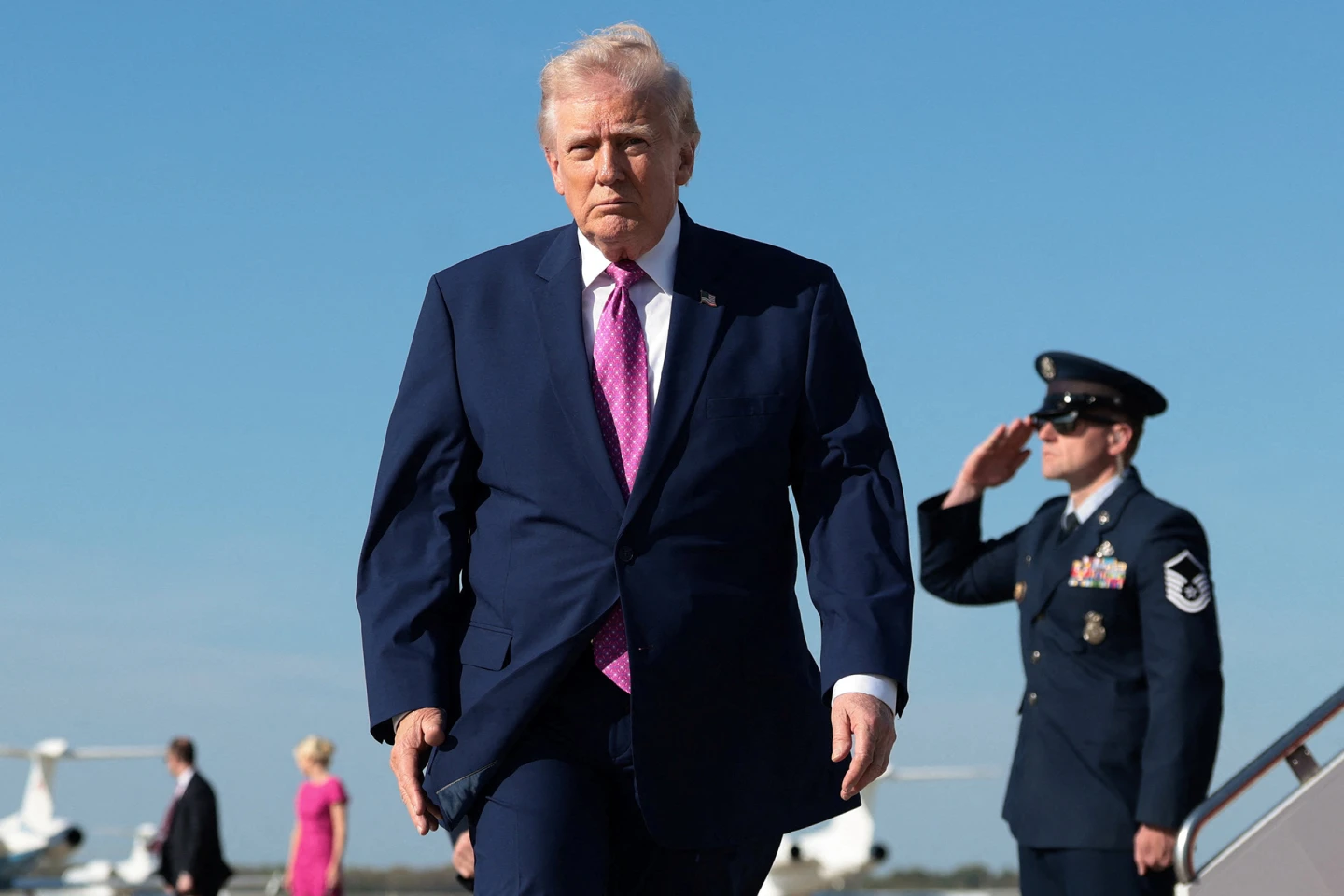
President Donald Trump signed an executive order on April 3 aimed at limiting the number of years college athletes can compete and how often they are able to transfer schools.
Under the order, athletes would be limited to five years playing and one transfer without penalty. Currently, the NCAA’s Division I eligibility timeline is five calendar years to play four seasons.
In the 2020-2021 season, the NCAA allowed athletes an additional year of playing due to the COVID-19 pandemic. Redshirts for medical and participation reasons have also allowed athletes to far surpass five years of eligibility.
This past year, seventh-year guard Tyler Cochran transferred to the University of Rhode Island, his fourth school. On Friday, P.J. Haggerty, a college basketball star, announced his commitment to Texas A&M University, his fifth college in five years.
“I think that the role I have as a recruiter is to make sure that this day and age is much more about informing them of the impacts of their decision,” URI football head coach Jim Fleming said. “I talk to them about the soft currency things. When you graduate from an institution, if it’s institution number three, what do you call your alma mater?”
This executive order would go into effect on Aug. 1, but multiple lawyers of colleges and athletes told ESPN the order would most likely not hold up if it were challenged in court.
There has never been an official vote on any legislation related to college sports, as the House of Representatives has delayed voting on the SCORE Act.
The bill also aims to prohibit the NCAA from restricting an athlete from entering a name, image and likeness agreement. Since 2021, NIL has been encouraged by the NCAA, allowing school policies and state laws to oversee the deals made.
State laws aim to prevent the tools of NIL to be used as a recruitment technique.
“I’m hoping it will stay in that situation where people are here because they want to be here,” Jeff Johnson, associate athletic director for student-athlete development, said. “That’s the main thing. People are wanting to be URI alums, and people want to perform at the best they possibly can at the [Atlantic 10] collegiate level.”
In his 12 seasons with the Rams, Fleming has built up the program to become a school where players want to come based on experience.
“I think it’s still important to be able to sit there and say, ‘Yeah, I’m a University of Rhode Island graduate,’” Fleming said. “I think that’s a source of pride. When you have a chance to come back and visit your school, do you feel like it truly is a homecoming because you were committed to that place for a long time?”
Aside from the length of playing time and transfer limitations, the order also plans on “implementing revenue-sharing in a manner that protects and expands opportunities in women’s and Olympic sports.”
This would be done by creating a national registry for player agents and school policies to prevent cutting scholarships or funding from women’s and Olympic sports.
As a kickstarter for more discussions within Congress, this executive order comes just before the SCORE Act will potentially be reintroduced this month.
Although the administration could be challenged on the order, Trump continues to threaten to pull federal funds from a university that would disobey the order. This bill would declare athletes as non-university employees and give them medical benefits.