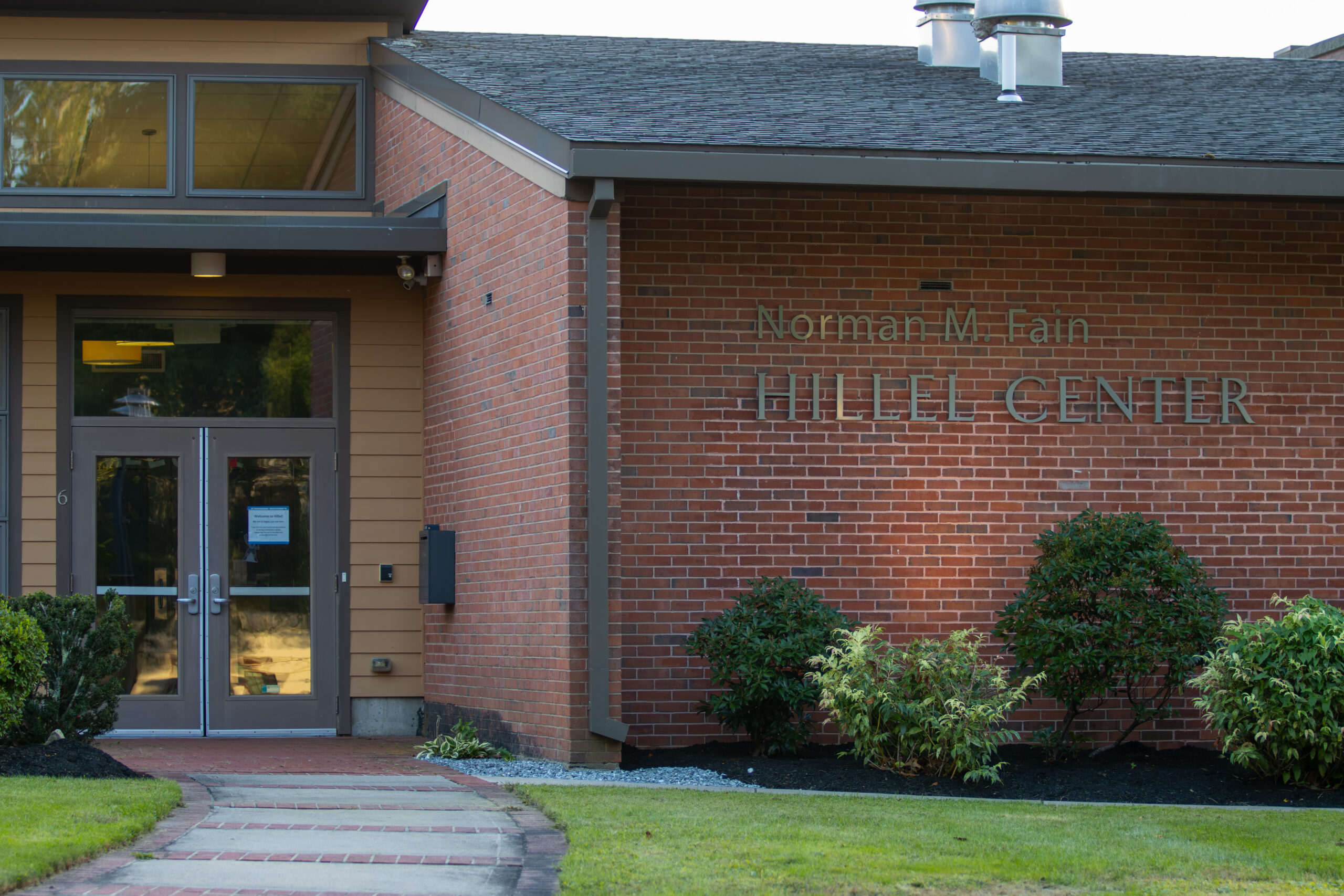
With an informal, cozy Shabbat atmosphere on October 2nd, members of the Norman M. Fain Hillel Center’s staff and e-board invited the community to take part in the celebration.
Seven days of Sukkot have passed. It is now the eighth and final day of the festival, known as Shemini Atzeret. Early rabbinic sources describe this day as “yom tov aharon shel ha-hag,” or the last day, but the Talmud declares “the eighth day is a festival in its own right.” And the University of Rhode Island’s Hillel concurs.
The festivities are split into two parts. First, the service must take place. Walking through the doors of the building, guests pause to notice and admire the whiteboard sign decorated with illustrations of the Star of David and the greeting “Shabbat Shalom.”
Two Shabbat candlesticks are lit in the center of the room as the chairs form a half-moon shape around them. An important physical symbol for the Sabbath, one candle represents the biblical command to remember, “zachor,” and the other represents the command to observe, or “shamor.”
The gathering for service is diverse. Students taking a class on cultural understanding have come to observe the Torah readings and relay their newfound perspectives to their class. Jewish students who find community and connection at Hillel each semester rejoice in the familiarity of Friday evening service. Members of Hillel’s staff lead recitations and melodic passages with generosity and devotion.
Through the efforts of executive director Amy Olson, Hillel seems to understand the value of bringing people together with acceptance and inclusivity in mind. Every guest feels comfortable following the staff, and there is clear admiration for the students who recite passages in Hebrew.
“It was very interesting to see how they keep old traditions alive, especially because they knew what those words meant,” first-year attendee Gabriel Volden said. “They were able to speak [Hebrew] fluently, and it was very impressive. How much it survives, it was just a good feeling in the room.”
On Sukkot, people of the Jewish faith are commanded to leave their homes and spend seven days in a temporary structure. The reminder that life is not always secure and that uncertainty is not something to be afraid of feels applicable to the demographic in the room.
Challah is served next in the Sukkah. More students have now filtered in to attend the second half of the evening: dinner service.
The Sukkah itself was built during the earlier days of Sukkot. The roof of the dwelling is paneled, allowing students to see the dusky sky while the chorus of “L’chaim” acts as a precursor to sips of grape juice. When asked what celebrating this holiday means to him, first-year Ethan Moskowitz had deep remarks.
“It’s really special to me because I was raised Jewish and being able to celebrate my faith and follow it on campus is so important to me and my parents,” Moskowitz said.
At dinner, guests take their plates to the spread of honey mustard chicken, tossed green beans, roasted potatoes and apple crisp with fresh strawberries. Hillel’s culinary staff planned out a meal that is fully kosher and is sensitive to the allergens and dietary restrictions of the guests. Marta Ginsberg, the Israeli fellow at Hillel, examined the significance of the meal itself.
“The food connects people who don’t know each other,” Ginsberg said. “At Hillel, people are coming for the first time, and it just gives a welcoming, family feeling.”
On this eighth day of Sukkot, the final day of celebration, the sentiments of gratitude and devotion feel essential. Nearly two months will pass until the Jewish community celebrates Hanukkah, but until then Hillel has given its community some food for thought.