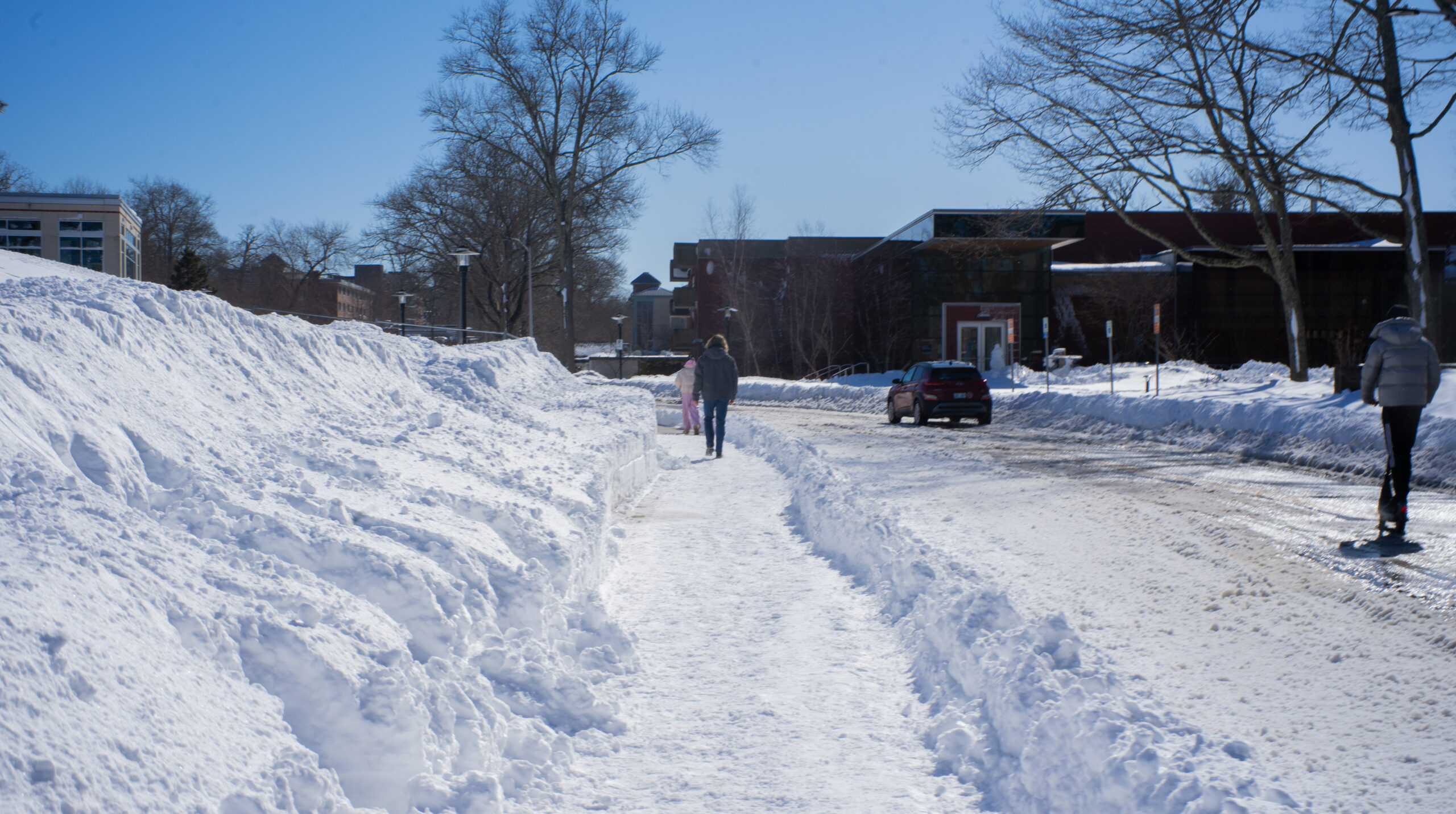
After a historic blizzard hit the northeast in February, the University of Rhode Island had their work cut out for them clearing snow and making campus accessible to the community.
The blizzard of 2026 was the largest snowstorm in the state’s recorded history, with some areas accumulating up to 37.9 inches of snow, according to the National Weather Service. South Kingstown piled up 36 inches of snow. The storm obstructed roads and cut power to thousands of state residents, resulting in three days of class cancellations.
Another snowstorm in January caused one day of class cancellations on Monday, Jan. 26, after South Kingstown accumulated 15 inches of snow.
The university is required to make all pathways accessible following any adverse weather conditions like snow, according to Dorca P. Smalley, director at the Office of Equal Opportunity, in a previous interview with the Cigar in December.
How reasonable expectation of action is defined is subjective to each city’s laws, according to Smalley. South Kingstown property owners are required to remove snow or ice within 12 hours of notification, according to the town website.
Smalley encouraged students to report any obstructions, snow removal concerns, or broken or unreachable automatic door openers to Facilities Operations by completing a Work Order Request Form.
Reports from students this semester so far have been minimal, according to Smalley.
“We haven’t heard a whole lot of concerns given how impactful and significant this winter was,” Smalley said. “I mean you get some here and there, but I’m surprised.”
The community may not be aware of or using reporting systems like the work order forms available enough, according to Smalley.
“I think it’s a tool that our community isn’t really utilizing,” Smalley said. “I would encourage anyone with concerns to submit those forms. And that’s what we mean when we say that accessibility is a shared responsibility.”
Campus disability advocates received multiple emails from students during the January storm regarding accessibility issues, but did not receive any reports following the February blizzard, according to third-year student Maeve Malloy, the newest member of the URI Accessibility Task Force representing undergraduate students.
“We got some emails in that group saying that the sidewalks were very hard to walk through,” Malloy said. “Accessible buttons and even some ramps were blocked with snow. A lot of these emails were from wheelchair users. […] This time there was more time to deal with the snow, even though there was more snow. ”
Students may not be aware of how to report campus obstruction issues, according to Malloy.
“I didn’t know the correct way to report until I went to that first [Disability Task Force] meeting,” Malloy said. “They do make [the report form] very accessible on their website. I don’t think the information is as accessible as it could be.”
Leadership and staff are constantly thinking of how to keep campus safe and accessible, though implementation is not always perfect, according to Markeisha Miner, vice president and chief diversity officer of the Office of Community, Equity and Diversity.
“We need the community’s help in letting us know what’s missing so that we can address it promptly,” Miner said.
Improved communication between disability advocates and university employees could improve turnaround time on weather management, according to Malloy.
“I feel like there could be better communication between groups,” Malloy said. “Like making sure that facilities know that specific places need to be clear before students and faculty return to campus. And also, facilities saying, ‘yes it’s not done right now but here’s like a timeline of when this will be done.’”
Malloy said the Accessibility Task Force is advocating for hiring more facilities workers in the event of another storm.
“How do we get more people hired in facilities so it’s not just a few folks trying to do all this stuff and then getting blamed when it doesn’t work?” Malloy said. “I don’t want to throw anybody under the bus. It’s a really complicated issue.”
More information about the Accessibility Task Force and the Disability Advocacy Group can be found on their respective websites.