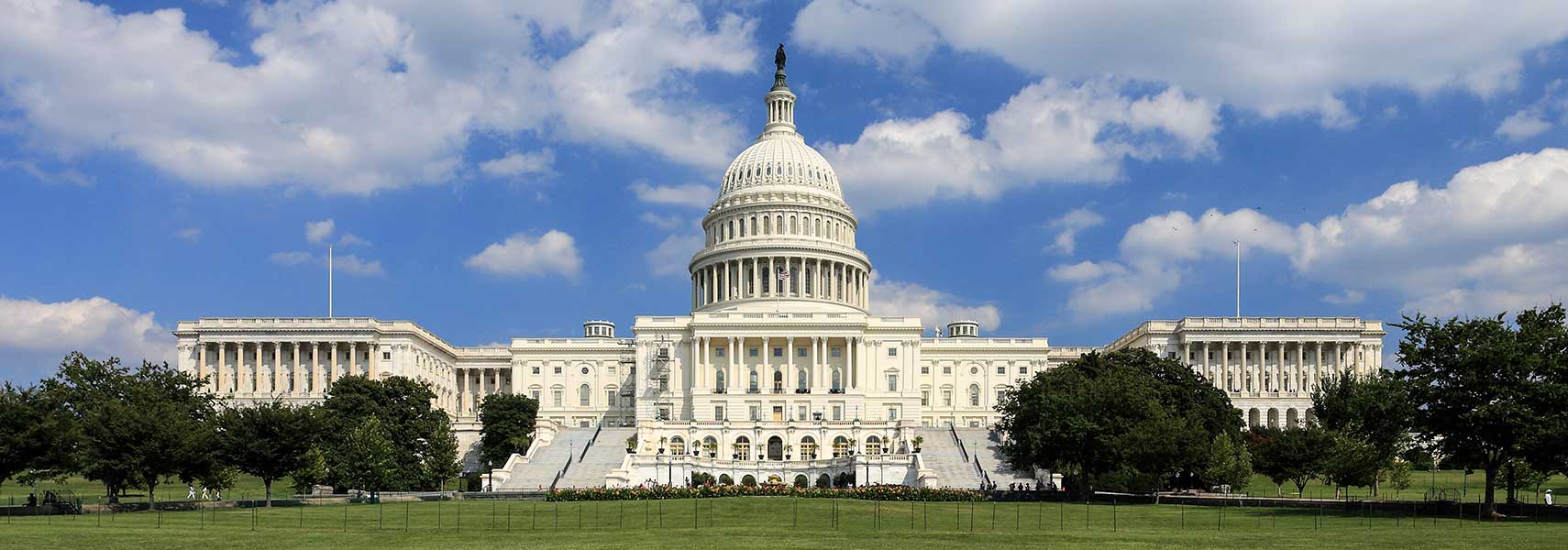
President Donald Trump signed a partial funding bill from the senate appropriating government funds for the remainder of the year while allocating two weeks of funding to the Department of Homeland Security on Feb. 3.
Congress agreed on appropriations that fund nearly all aspects of the government in the longest package they have passed all year, according to University of Rhode Island Political Science Assistant Professor Peter McLaughlin. This year, congress has been passing spending packages that last the span of a couple of weeks to a month.
Now there is a looming shutdown battle over DHS funding, according to McLaughlin.
A shutdown ends when one of the sides feels like they are losing the battle and losing the public, with a lot happening behind the scenes but correlated with public opinion, according to McLaughlin.
If congress can’t come to a timely agreement on DHS funding, it would represent the second shutdown in this year’s government following the longest federal government shutdown in American history in October, according to URI Political Science Associate Professor Daniel Carigg.
“In my estimation, this is somewhat of a continuation of what happened in the fall,” Carigg said. “Federal workers have been through a lot this year.”
Congressional Democrats did not agree to fund DHS due to the backlash of the Trump administration’s use of Immigration and Customs Enforcement, according to McLaughlin.
“Because of the recent events in Minneapolis, ICE is extremely unpopular with the American public right now and polling shows that over and over again,” McLaughlin said. “They feel like they have a wedge on this issue and that they are on the side of public opinion as they are making demands.”
Congressional Democrats are seeking to ban masks for federal agents, require viable IDs, judicial warrants to enter homes, body cameras for ICE agents and ending roving immigration patrols, according to a letter sent to House Majority Leader Mike Johnson and Senate Majority Leader John Thune.
“I don’t think there will be Republican opposition to items like requiring body cams but they also don’t seem willing to budge on the masks issue,” Carigg said. “Democrats might have an uphill battle there.”
Carigg predicted that the next bill for DHS funding may also be in the tune of a couple of weeks as reform negotiations progress.
“The politicking is happening right now,” McLaughlin said.
If the government shuts down from DHS negotiation gridlock, services such as Transportation Service Administration, Federal Emergency Management Agency and the Coast Guard will be caught up as subsidiaries of DHS, according to McLaughlin.
“When it comes to shutdown politics, the goal of both sides is going to try and make the other side seem unreasonable,” McLaughlin said, “The reason for that is generally speaking, shutdowns are very unpopular so each side will want to blame the other side and the extent that both sides think they can do that, the shutdown is likely to extend.”
For more information on the current happenings of the Senate and House of Representatives on a potential partial shutdown over ICE’s actions, visit Congress.gov | Library of Congress.