From the third floor of the Rhode Island School of Design Museum in Providence, the calls of Arctic seals echo out for visitors.
The sound comes from “Natchiq | Onkeehq | Isuwiq – Indigenous Artists Honor the Seal,” a new exhibition of art celebrating the deep ancestral connection between coastal Indigenous peoples and seals.
Works in the exhibit showcase perspectives of Alaska Native and Canadian Inuit artists from 1900 to the present, weaving connections among coastal Native communities through a shared profound relationship with the seal. Prints, drawings and carvings are displayed alongside contemporary textiles, photographs and installations.
“Seal is basically a center of our lives,” artist Kunaq Tahbone said in an exhibit description. “We’ve made songs for them. We’ve made prayers around these animals that give us clothing, that give us nourishment, that give us heat, that give us light.”
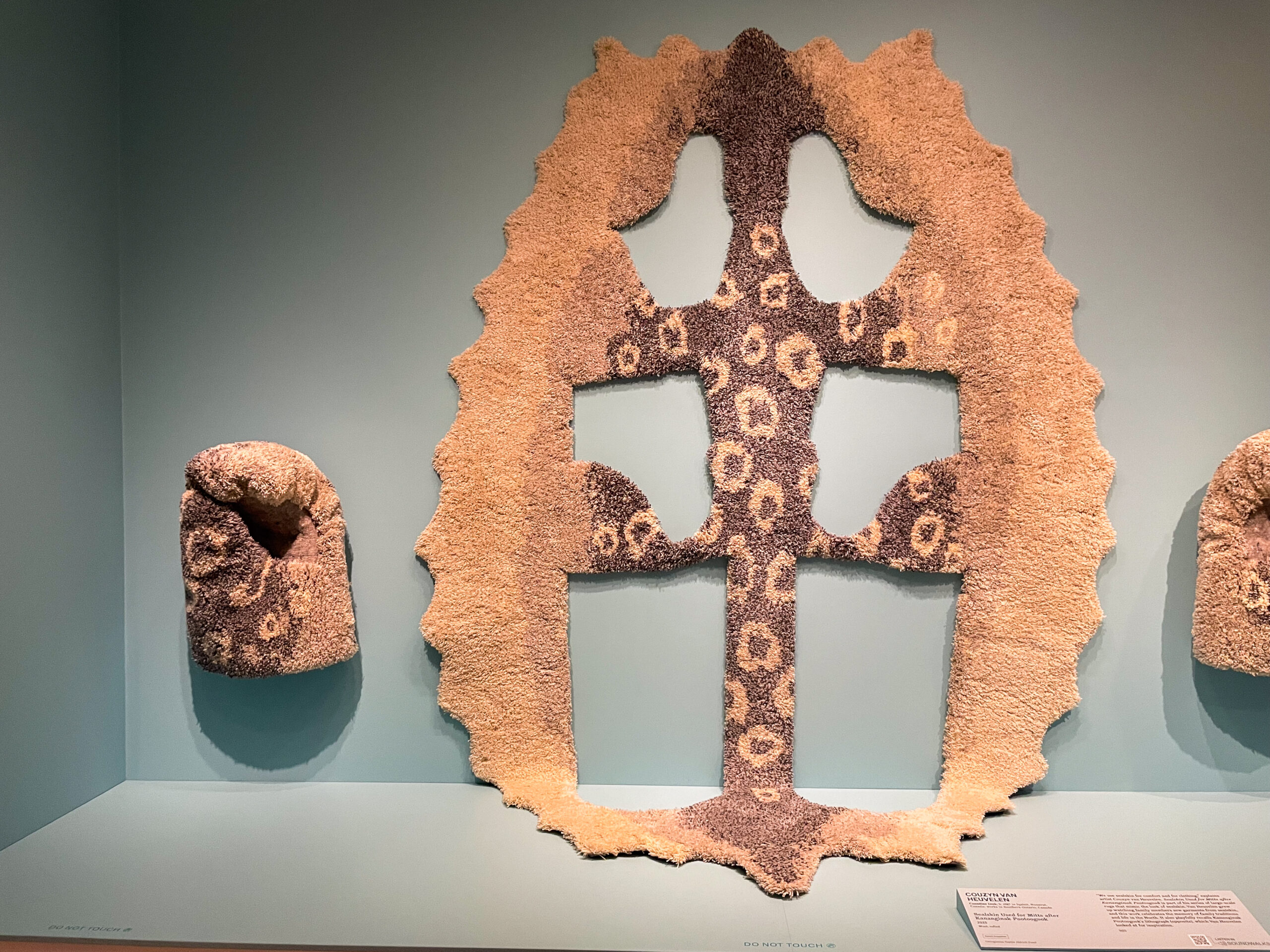
As you enter the exhibit, two giant tufted gloves and a wall-length rug resembling a splayed sealskin command attention. This installation by Couzyn Van Heuvelen is a tufted recreation of a lithograph of the same materials created by another Inuit artist, Kananginak Pootoogook, in 1991, displayed just across from it.
“Sealskin is one of the most incredible materials because it is warm and waterproof and also incredibly beautiful,” Nadia Jacinsky-Sethi, a curator of the exhibit, said in the exhibit’s audio tour companion. “It has this sparkle to it when you look at it in the light.”
The center of the room displays seal scratchers, tools used to lure seals to the water’s surface by imitating the sound of seals clawing breathing holes in the ice. The scratchers were carved from wood by a “once-known maker” between 1800 and 1900.
Before the exhibit continues, some of the stars of the exhibit are introduced at the entrance to the next room. A diagram identifies sea mammals of the North, like the fashionable Ringed Seal, the tusked two-ton Pacific Walrus and the rare black and white Ribbon Seal.
In the 24-hour darkness of some Arctic winters, when firewood runs short, seal oil is a lifeline. A clear, seal-shaped oil lamp made by Eric Hamar is displayed in the next room. These lamps are also used in traditional ceremonies.
“The flame will dance across it in these undulating waves across the top of it,” Jacinsky-Sethi said.
Beyond sustaining physical life, the seal also appears in oral tradition and in spirituality. Seals are known to give themselves to those who are generous, resourceful and follow correct ways of being, according to an exhibit description.
Three illustrations reference the story of Sedna, a sea goddess believed to have been a woman escaping an unhappy marriage by boat, according to a description of a lithograph entitled “Where She Lives,” by Ningiukulu Teevee. Her fingers were severed by her father as she clung to her boat. From them grew fish, seals, walruses and seaweed. The lithograph by Teevee illustrates the fingerless hands of Sedna reaching out from the seaweed.
Between these illustrations hangs a painting entitled “Isuwiq, Guardian of the Sea,” painted in 2025 by artist Linda Infante Lyons. In a contemporary vision of Indigenous icon imagery, a woman protectively holds a seal in her arms like an infant, both with halo-like rings over their heads.
Whether serving as protection from the elements or looks on a runway, the versatility of sealskin is showcased in the final room. A large paper-like coat stands in the center of the room, lightly crinkled and delicately held together with red stitching. The description reads “Gutskin Parka,” as the waterproof coat is made from the intestinal lining of seals. A fuzzy children’s parka made of seal fur stands in striking juxtaposition next to the gutskin coat.
Some artists combine traditional Indigenous patterns and seal materials with contemporary fashion. Alongside the clothing sits a colorful seal fur tote adorned with patterned inlays, porcupine quills and beadwork by textile artist Golga Oscar.
A red dress stands alone in the corner of the room. The top portion of the dress is made of spotted sealskin, and the skirt is made of bright red fabric. “Siima,” made by designer Bobby Brower, honors murdered and missing Indigenous women, girls and two-spirits, including the designer’s own sister.
“This dress represents her and all our stolen sisters, girls and two-spirits taken from us,” Brower said in an artist statement. “The spotted sealskin symbolizes uniqueness, as no two sealskin hides are the same– just like every human being is unique.”
Ilgevak Peter Williams, a hunter and designer of a fur pencil skirt on display, wanted to share his adoration of seal hides with the world by bringing his works to New York Fashion Week, but was restricted by laws prohibiting seal materials, according to an interview for the exhibit. Williams said being met with laws created within a colonial framework was heartbreaking.
“I think I was literally putting death in their faces, and within nature there’s, there’s a lot of death,” Williams said. “I think once a culture and people are removed from that daily interaction with nature, that seems to be easily forgotten.”
“Natchiq | Onkeeqh | Isuwiq” is on view and free for URI students at the RISD Museum from April to October of this year.