By projecting light through photographs, the first lecture in this semester’s Center for the Humanities Brown Bag Series sheds light on the lesser-known histories of Indian soldiers from British India who were hidden by Italian families during World War II.
The lecture “SHELTERED: The Italians Who Saved Escaped Indian Prisoners of War during WWII,” was presented by Annu Palakunnathu Matthew, interim department chair and professor of photography in the art and art history department, at the University of Rhode Island on Sept. 24.
While introducing Palakunnathu Matthew, adjunct professor of humanities Vincent Colapietro emphasized learning about the lives of these soldiers.
“They appear to be lives that have never been lived, so how could they have been violently extinguished?” Colapietro said. “Annu knows better, and she would have us know better.”
Volunteering for their then-colonizer, Great Britain, 2.5 million Indians fought in World War II, according to Palakunnathu Matthew. Soldiers taken prisoner during the war were held in a camp in Abruzzo, Italy.
When Italy changed its allegiance from the Axis Powers of Germany and Japan to the Allies, which included the United States and Great Britain, many war camps were left unarmed, and Indian prisoners were able to escape, according to Palakunnathu Matthew. 10,000 of these escaped soldiers were hidden by Italian families.
“For the last six years I’ve been connecting with the descendants of both the Indian and Italian families and collecting their family stories and photographs,” Palakunnathu Matthew said.
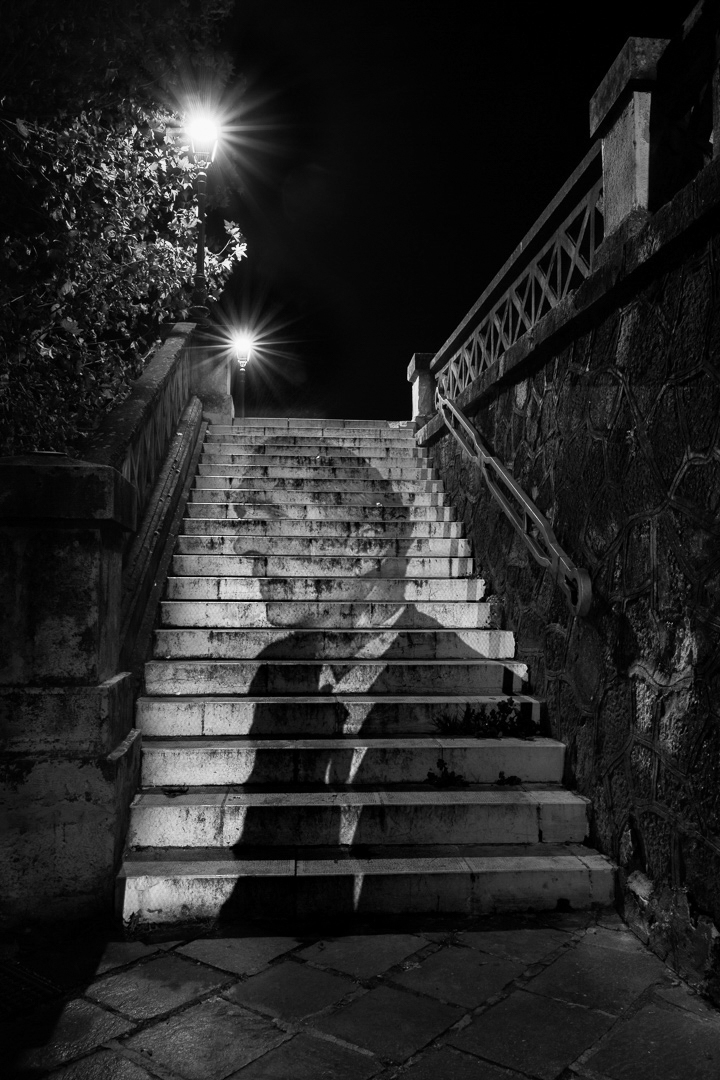
She projected many of these photographs on landmarks such as fountains, creating visually stunning scenes that blended into the night sky, according to Palakunnathu Matthew. These projections use a combination of long-exposure photographic techniques and lights. She believes that this approach blends history with the present.
“Using large-scale projections of photographs featuring the Italian and Indian, I transformed the space that they hid in into living memorials, reviving their voices and bridging past and present,” Palakunnathu Matthew said.
Palakunnathu Matthew played a video that gave her audience a glimpse into the setup process of filming and creating her projections and artwork. She also showed photographs from the House of Time, a site left untouched since the 1940s that she was allowed to photograph. Some of these art installations were presented this summer at the Palazzo Ducale Orsini-Colonna in Tagliacozzo, Italy.
One of the soldiers preserved in Palakunnathu Matthew’s work is Lt. D. S. Kalha. She explained that members of the Sikh religion, which Kahla was, do not typically cut their hair; however, a doctor named Dr. Boccaletti suggested that he cut his hair to pass as an Italian.
Thanks to the courage and generosity of the doctor and others like him, Kalha and others were able to escape these prisons and successfully hide, according to Palakunnathu Matthew.
Relatives of the Indian soldiers and Italian families played a significant role in gathering the images and documents used in Palakunnathu Matthew’s work. They allowed her to form connections.
Palakunnathu Matthew was able to acquire the hospital records of Boccaletti from his daughter. After receiving these documents, she made the decision to project the images of Kahla onto the actual hospital record.
Kalha’s story is just one of the pieces of history that Palakunnathu Matthew has preserved through her art installations. She recounted love stories and tales of the bonds formed between the Indian prisoners and the Italians who helped them, connecting her audience with the people whose histories she told.
Palakunnathu Matthew said she received a 2024 Beatrice S. Demers Foreign Language Fellowship, which is available to all Rhode Islanders, with a preference for URI students, to study Italian or another foreign language.
“This story takes on a profound meaning as wars and famine continue to range across the world,” Palakunnathu Matthew said. “The courage of these [people] demonstrates that people can transcend cultural and national boundaries.”
The next Brown Bag lecture, hosted by Susie LaChapelle and Jason Dwyer, will take place in the Swan Hall Hoffman Room on Oct. 22 at noon.